
Business Engineering/Transformation & Change Management/3–5 years

Digitaltransformation& AI.

The construction digital transformation that works in our sector does not consist of adding software on top of the existing. It consists of rebuilding the flow architecture, from parametric design to CNC machines, and integrating AI on the points where it produces measurable operational gain, not signalling. Most facade contractors, system suppliers, glass processors, metal workers still operate on digital foundations installed fifteen years ago. The horizon is 3 to 5 years, human change management included, from digital asset audit to AI integration on measurable operational points.

Digital transformation and AI in the facade industry, parametric workflow and AI integration in facade companiesEN.032
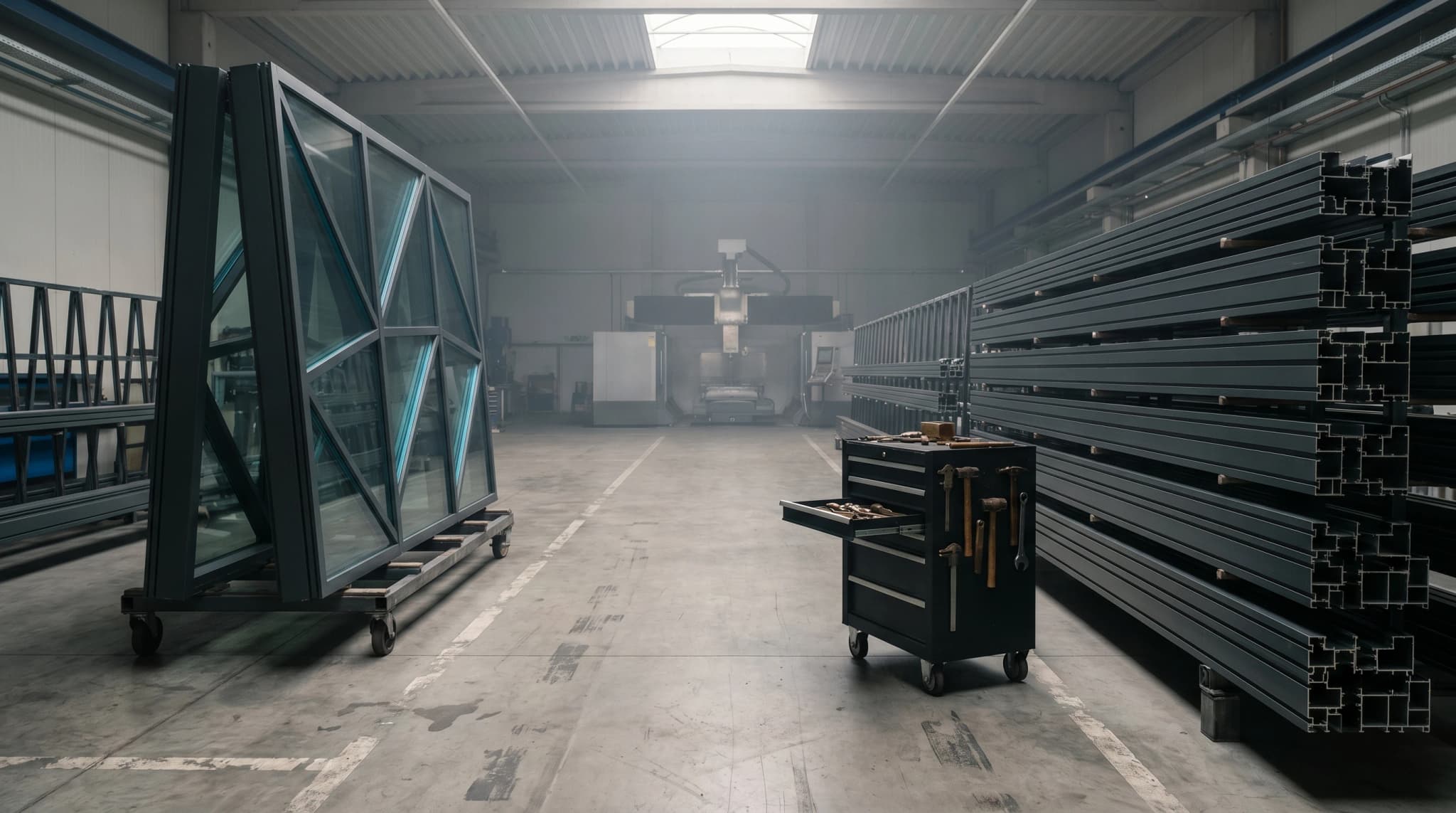
FIG. 01 BISParametric workflow in post-shift digital environment, end-to-end file-to-factory.
Atelier Shili & Partners
3–5years
transformation horizon
04workstreams
audit to AI integration
04profiles
mandators, contractors to funds
04modes
diagnostic to retainer
01· Plate, methodological positioning

The positioning.

Transforming an envelope-sector company toward parametric workflows and useful AI integration demands three coupled knowledge bases, deep facade industry · data flow architecture · pragmatism on tools.

§ 01The triple combination

Deep industry understanding, language of the engineering team, of the workshop head, of the pricing lead, of the field sales, because a digital transformation that does not translate into the operational language remains a slide project. Architectural rigour on data flows, product data modelling, interoperability via open standards (IFC 4.3, BCF), single data source governance. Pragmatism on tools, what works in our sector, not what sounds modern on a trade show floor.

§ 02The gap vs adjacent actors

Software publishers sell a catalogue vision. Generalist SI integrators carry methods shaped for other industries (pharma, banking, retail), they rarely work in a facade workshop. AI-applied-to-construction firms emerge in 2025-2026 but remain generalist on the sector. We carry the facade-dedicated angle: transformations that hold at three to five years because they are designed with the workshop reality, not against it. No capital partnership with a software publisher, no commission on recommended licences. The technology neutrality is documented.

02· Plate, recurring diagnostic

The observation.

On the companies we audit, the same diagnostic returns with a striking regularity. Excel central · 2D plans dominant · manual regulatory checks · application silos · EUR 1.5–3 M/year hidden costs on EUR 50–80 M company.

§ 01Excel as central system

Extended Excel acts as the central system, pricing, project tracking, financial reporting, sometimes even HR management. Versions proliferate, business rules are buried in formulas only one person knows. The departure of a pricing lead takes three years of know-how that was never recorded.

§ 02Dominant 2D plans

2D drawings remain the primary information vehicle between engineering and workshop. 3D models exist (Revit for design team interface, Rhino sometimes), but are not exploited downstream of fabrication. Manual re-entry between the 3D model and production drawings is a structural source of errors. Regulatory checks (SIA 329, Eurocodes, DTU 33.1, Eurocode 9) are run manually, 20 to 30 % of engineering time consumed.

§ 03Application silos

Each business software operates in silo. Project data is re-entered several times, pricing, sales management, execution dossier, shop drawings, ERP. A wrong dimension on a shop drawing becomes a EUR 15,000 rework on site.

§ 04Accessible gains

Operational gains accessible through a well-conducted transformation are substantial, typically 25 to 40 % of engineering time recovered on repetitive tasks, 50 to 70 % reduction in pricing time, production defects reduced by 40 to 60 %. But most companies do not capture them, for lack of method to conduct the transformation without disorganising current operations.

03· Plate, four coupled workstreams

What we bring.

Four coupled workstreams cover the full transformation cycle, from initial audit to AI integration.

§ TLDR · 01Map, not guess.
§ TLDR · 02Architect, not stack.
§ TLDR · 03Measurable AI, not signalling.
§ TLDR · 04Vonbuild proposed, not imposed.
Parametric Rhino Grasshopper facade workflow, post-shift engineering environmentFIG. 03
03 / 03File-to-factory workflow, from parametric model to CNC machines, without re-entry.
Atelier Shili & Partners
01Digital asset
audit

Digital asset audit.

Tools mapping by function · data flow mapping · bottleneck and hidden cost identification.

Tool mapping by function, engineering, production, sales, procurement, finance, HR. Flow mapping, where data is born, how it circulates, where the breaks are (manual re-entry points, CSV exports, shared Excel files becoming de facto sources of truth).

Hidden cost analysis, time lost in re-entries, translation errors between phases, site rework due to engineering/workshop inconsistencies. On a company of EUR 50-80 million in revenue, the documented hidden cost frequently exceeds EUR 1.5 to 3 million per year, hidden in the wage mass and in the project margin that erodes.

Documented hidden cost
EUR 1.5–3 M/year (EUR 50–80 M co.)
Output
Diagnostic + maturity scoring
Tools mappingData flowsHidden costs
02Target digital
architecture

Target digital architecture.

End-to-end file-to-factory · continuous regulatory verification · data governance.

End-to-end file-to-factory flow, from parametric design to CNC machines, cutting, machining, drilling, thermoforming, SSG assembly. Automation of regulatory checks continuously during design. Centralised project data management on a single 3D model.

Interoperability through open standards, IFC 4.3, BCF, proprietary APIs of ERPs and production machines. Data governance, who creates, who validates, who archives, with auditable traceability. The target architecture is not a generic schema, it is built for the client's workshop.

Standards
IFC 4.3 · BCF · ERP API
Output
Architecture usable by integrators
File-to-factoryIFC 4.3BCFSingle 3D model
03AI
integration

AI integration.

5 measurable operational points: tender doc analysis · shop drawing generation · regulatory verification · site risk · financial reporting.

Analysis of thousand-page tender documents in minutes, structured extraction of requirements, detection of at-risk contractual clauses, indicative pricing, risk scoring. Generation of shop drawings from the native 3D model, 50 to 70 % reduction in engineering time on standard shop drawings. Continuous compliance verification during design.

Site risk anticipation from historical projects, detection of at-risk interfaces, recurring claims, critical supplier dependencies. Project financial reporting automation. The 2025-2026 models (Claude 3.5/4, GPT-4o/5, Gemini 2 Pro) enable use cases not viable two years ago. Model selection by technical criteria, not by hype.

2025-26 models
Claude · GPT · Gemini · multi-modal
Engineering shop drawing gain
−50 to −70 %
Tender docShop drawingsRisk scoringReporting
04Connection
with Vonbuild

Connection with Vonbuild.

Agentic AEC platform within our studio perimeter, proposed not imposed. The client selects any available solution.

Vonbuild, the agentic AEC platform founded by the same studio, can be deployed to complement the mission. Shili & Partners advises and carries the transformation; Vonbuild equips when the client chooses to equip with our agents. Vonbuild is proposed, not imposed.

The client can select any AI platform available, generalist solutions (Microsoft Copilot, Claude for Work, ChatGPT Enterprise), AEC-specific solutions (Augmenta, Higharc, Spacewell), in-house developments. Our advisory remains neutral, we recommend the architecture fit to the situation, not a proprietary solution.

Posture
Proposed never imposed
Concurrent solutions OK
Copilot · Higharc · Spacewell · in-house
VonbuildMicrosoft CopilotAugmentaNeutrality
Rhino + Grasshopper tutorial08:32
Parametric facade, Rhino + Grasshopper tutorial.
SetupGeometryOutput
00:00 / 08:32
04· Plate, four observed schemas

Typical transformations.

Four schemas cover the majority of cases supported. Not exclusive, a company can combine two or three according to its starting maturity.

Note · measurable operational gains

Parametric engineering: −30 to −50 % engineering time, −40 to −60 % production defects · AI-augmented pricing: −50 to −70 % standard pricing time · Unified digital twin: handover dossier becomes documentary asset for renovations 15-25 years · Connected factory: +20 to +35 % productivity, regular quality, short series flexibility.

Autodesk06:18
One Digital Source of Truth, transforming construction with Autodesk BIM.
VisionWorkflowOutcomes
00:00 / 06:18
01Parametric
engineering

Parametric engineering transformation.

Engineering team that shifts from Word/AutoCAD 2D to Rhino/Grasshopper with file-to-factory flow to workshop CNC machines.

The change is not cosmetic, it modifies the way of designing, documenting and transmitting.

Typical gains observed on missions post-transformation: engineering time reduced by 30 to 50 % on repetitive tasks (bay drawing generation, dimensional annotation, consistency checks), production defects diminished by 40 to 60 % through elimination of re-entries, volume throughput capacity increased at constant headcount. The investment cost, licences, training, engineering process restructuring, is typically amortised in 12 to 24 months on a company of EUR 30-80 million in revenue.

Engineering time gain
−30 to −50 % repetitive tasks
Amortisation
12-24 months (EUR 30-80 M revenue)
Rhino/Grasshopper−30 to −50 % timeAmortised 12-24 months
02AI-augmented
pricing

AI-augmented pricing.

Integration of AI tools for tender document analysis and parametric quote generation, indicative quote in a few hours.

Automated reading of the specification, extraction of technical requirements, cross-reference with the company's pricing base, production of an indicative quote in a few hours, validated and enriched by the senior pricing lead.

Typical gains: pricing time strongly reduced (50 to 70 % on standard dossiers, 30 to 40 % on complex dossiers), win rate improved by personalisation of the response (the pricing lead spends time on commercial strategy and technical differentiation, not on data entry), margins protected by the precision of the initial pricing, fewer under-priced dossiers that bleed in execution.

Pricing time gain
−50 to −70 % standards
Margin effect
Fewer under-priced dossiers
−50 to −70 %Risk scoringMargins protected
03Unified
digital twin

Unified digital twin.

Single model shared between design, production, installation and maintenance, no re-entry between phases.

The model carries all business views, geometric for engineering, bills of materials for procurement, sequences for installation, health log for the operator, without re-entry between phases.

The operational effect goes beyond productivity. Drastic reduction in translation errors between phases, cycle acceleration, handover quality improved by data continuity. For an owner or portfolio manager, the operated handover dossier becomes a documentary asset, intervention base for renovations at 15-25 years, post-incident expertises, regulatory energy audits (CECB, DEET, EPC).

Phases covered
Design · prod. · install. · maint.
Regulatory audit
CECB · DEET · EPC
Documentary asset DOECECB · DEET · EPC15-25 years
04Connected
factory

Connected factory.

Integration of CAD data directly into production chains, machine data in real time to MES/ERP.

Integration of CAD data directly into production chains, cutting and machining CNCs, thermoforming presses, SSG assembly lines, quality control stations. Machine data rises in real time to the MES or ERP, utilisation rates, stoppage causes, detected quality deviations.

Typical gains: productivity increased by 20 to 35 %, more regular quality through reduction of manual setting errors, flexibility strengthened on short series and variable geometries, the norm on iconic projects where each bay may differ. The associated capacity investment (machines, MES licences, SI integration) is significant, the diagnostic phase specifies the order of magnitude and the amortisation phasing acceptable for the client's financial structure.

Productivity gain
+20 to +35 %
Investment
Significant · diagnostic phasing
+20 to +35 %MES/ERPShort series
05· Plate, four interlocutor profiles

For whom.

Four profiles structure our interlocutors on digital and AI transformation missions in the envelope sector.

FIG. 05Matrix, four profiles × three axes
Target revenueCurrent maturityPivot need
01 · Facade contractors / fabricatorsEUR 20–200 MLevel 1–2 (Excel, 2D)Shift without destabilising
02 · Promoted CTO / TDn/a (intra)VariableSparring + prioritisation grid
03 · Funds post-acquisitionEUR 20–500 M portfolioOperational restructuring3-5 year value creation lever
04 · GC/TC envelope functionEUR 500 M+ (GC revenue)Heterogeneous packagesModernise without digital island
06· Plate, the DNA and three facets

What sets us apart.

The cardinal element distinguishing our advisory on the construction digital transformation is operational experience lived from the inside. Three operational facets attach to it.

§ Pivot equation
Four coupled workstreams are made possible by seventeen years in the trade, the digital transformation holds because it is designed with the workshop, not against it.
OUR ANCHORING

Seventeen years in the envelope trade.

Seventeen years in the envelope industry, including several years in pre-construction with a Tier-1 international contractor in glass envelope works. We have lived these digital transformations from the industrial side. We know the human and organisational pitfalls, the workshop head who resists because they built their authority on mastery of an obsolete tool, the engineering team that produces surface adherence without changing practices, the executive who launches three streams in parallel and finishes none, the senior pricing lead who fears obsolescence of their role. We have seen the sequence play out several times, what works, what fails, and at which precise moment the derailments set in.

01 / 03Trade

Industry grounding, not IT.

Engineer, workshop head, sales language, not only CIO.

Our method systematically goes through the workshop before the executive committee, and through the engineering team before the investment committee. Recommendations testable before being budgeted.

WorkshopEngineeringEXCO
02 / 03Neutrality

Neutrality on tools.

No hidden partnership with a software publisher · no commission on licences.

When we recommend Rhino over a proprietary alternative, it is because the Grasshopper ecosystem dominates largely in our sector, not because McNeel commissioned us. The rule is contractually documented.

∅ commissionTCODocumented
03 / 03Pragmatism

Assumed pragmatism.

What works operationally · not what sounds modern.

On a workshop without stabilised manufacturing management, the right priority is not generative AI, it is base flow consolidation. This sequencing is rarely the one solution vendors propose, but it is what holds at three years.

Manufacturing firstHolds at 3 yearsAnti-hype
07· Plate, four engagement modes

Engagement modes.

Four modes cover the majority of our mandates on this service.

Mode d'interventionFormatDuréeQuand l'utiliser
§ 01Framed digital diagnosticFixed fee4–8 weeksDefined perimeterDiagnostic report + indicative roadmap 24-36 months. Objectify the lag and build a decision base before investment.
§ 02Strategic missionMission3–6 monthsPhased frameFull roadmap development, target architecture, sequencing, budget per phase, KPIs, change management plan. Executive committee validation.
§ 03Deployment missionMandate12–24 monthsBy complexityOperational implementation piloting. Sparring with responsible teams, weekly arbitration on hard points, escalation steering committee.
§ 04RetainerSparring2–4 d/monthAd hoc activationContinuous CTO/TD/executive sparring. Strategic decisions emerging, choice of major supplier, integrator, hybrid profile hire.
08· Plate, phases × deliverables matrix

Standard deliverable.

Deliverables are structured by mission phase. Four phases cover the matter effectively produced.

Fig. 08, Digital & AI Transformation deliverables matrixPhases × deliverable types · effective production of mandates
ScaleDiagnostic → Consolidation
Phase 01Diagnostic
  • Digital diagnosticCurrent state mapping, opportunities, costed quantification of gains. 40-60 pages.
  • Maturity scoringPositioning on sector grid 5 levels (artisanal → AI-augmented), anonymised benchmarks.
Phase 02Architecture
  • Target digital architectureFlow diagram, tools, roles, governance. Usable by integrators.
  • Transformation roadmapSequencing 24-36 months, budget per workstream, milestones, KPIs.
Phase 03Deployment
  • Change management planTraining by population, priority hires, internal communication, resistance management.
  • Transition protocolOld/new coexistence during shift, dossier arbitration.
  • Operational supportSparring transformation team, steering committee reporting, hard point arbitration.
Phase 04Consolidation
  • End-of-deployment reportTarget KPI attainment, gaps, recommendations next phase.
  • Target process documentationSOPs, templates, object libraries, governance rules.
Effective production, BE pole Digital & AI Transformation mandates.Fig. 08 · deliverables 1/1
§ Principle

Each deliverable is designed to be directly activated by the client's teams, without external translation phase.

09· Plate, articulation BE + EE

Articulation with other services.

Digital & AI Transformation articulates with several other BE services and with EE on the file-to-factory dimension.

§ 01Why construction digital transformation requires sector experience

The construction digital transformation that works in our sector does not consist of layering new software on existing processes. It requires rebuilding the architecture of flows, from parametric design to CNC machines, and integrating AI on points where it produces measurable operational gains, not signaling effects. Most envelope contractors, gammists, glass processors and metallurgists operate on digital foundations installed fifteen to twenty years ago. Their transition toward parametric, automated and AI-augmented environments cannot be led by generalist SI integrators who have never set foot in a glass workshop or in a curtain wall design office. Our methodology is calibrated to envelope industry reality, with sequenced transformations that respect production cycles and protect ongoing project execution.

§ 02Vonbuild as proposed, never imposed

For clients who choose to integrate AI in their envelope processes, Vonbuild — the agentic AEC platform founded by the same studio — can be deployed alongside the mission. Its articulation with Shili & Partners is documented in the studio's brand architecture : Shili & Partners advises and leads the construction digital transformation ; Vonbuild instruments when the client chooses to instrument with our agents. The rule is explicit : Vonbuild is proposed, not imposed. The client can choose any AI platform on the market, generalist (Microsoft Copilot, Claude for Work, ChatGPT Enterprise), AEC-specialised (Augmenta, Higharc, Spacewell) or in-house. Our advice remains neutral, we recommend the architecture adapted to the situation, not a proprietary solution. This neutrality is contractually documented and auditable.

10· Plate, continue reading

Continue reading.

Five entry points to explore the Business Engineering pole and its articulation with Envelope Engineering.

A digital transformation to structure?

Every digital mutation hinges on the quality of the initial diagnostic and on the sequencing that accounts for the workshop as much as the engineering team. Describe your company's context in a few lines, we revert to frame a first exchange.

Company brief
Shili & PartnersA Shili Build Ventures company