Expertises/Dynamic facade/Smart skin · Electrochromic

Smart Skin& embeddedelectronics.

An intelligent facade is not a product. It is a system, and every system requires an integrator who understands all its components without having a commercial interest in any of them. Electrochromic glass and smart skin technologies are now technically mature. The challenge is no longer whether they work : the challenge is selecting the right technology for a specific programme, integrating it with building systems (BMS, HVAC, shading), and ensuring long-term operability without vendor lock-in. Our role is that of a neutral advisor : we evaluate the full range of switchable glazing and embedded electronics technologies (electrochromic, PDLC, thermochromic) and specify the system that best matches your project constraints (building use, climate, facade orientation, energy targets, and budget).

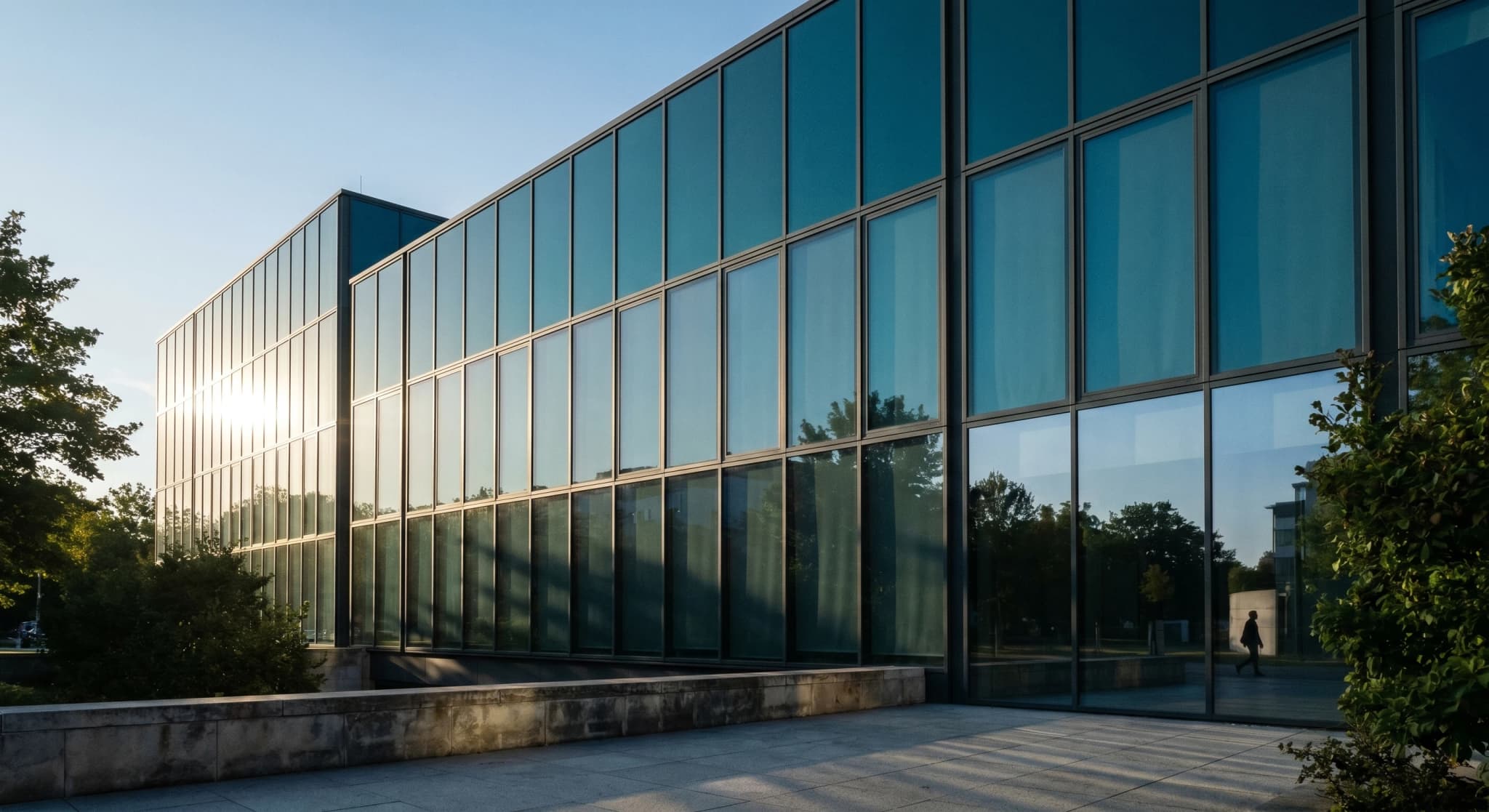
Electrochromic facade in action, tint gradient on contemporary towerPL.023 · Smart skin
01 / 02Electrochromic facade with tint gradient.
© S&P · Sprint 3
01Plate 01 / 07, Integration

What we integrate.

Smart skin facades combine active glazing, embedded sensing, actuation, and building automation into a single responsive system. Five technology layers structure the integration : active glazing, sensors, actuators, BMS control, communication protocols.

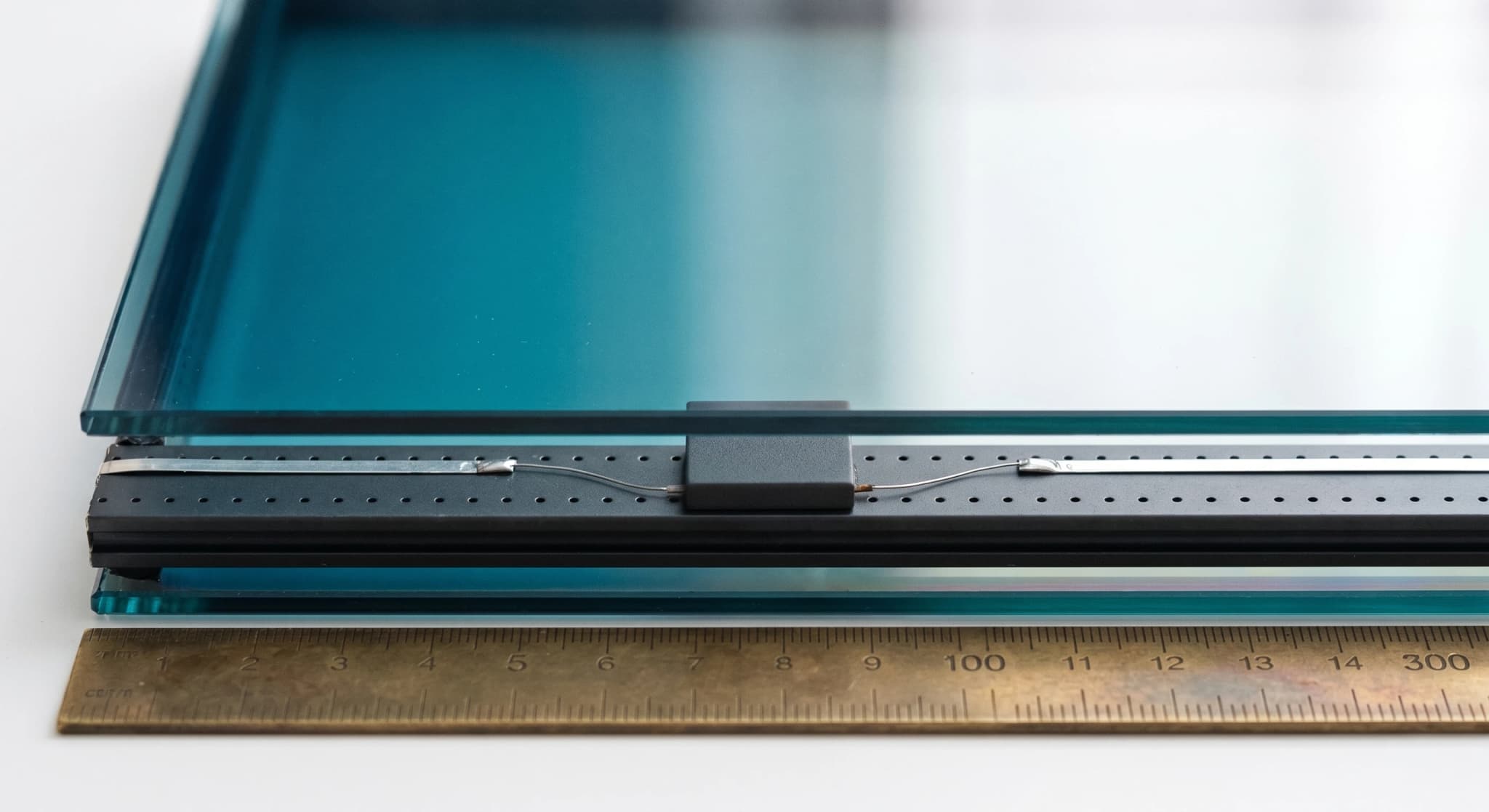
Electrochromic cell, laminated edge with silver busbars and sensorFIG. 01 · Cell
02 / 02Laminated electrochromic cell + integrated sensor.
© S&P
01 / 01Layer

Active glazing.

Electrochromic, PDLC, thermochromic : three switching mechanisms.

Electrochromic glass changes its light transmission in response to a low-voltage electrical signal. Visible light transmittance (VT) range typically 3-60 %, solar heat gain coefficient (SHGC) 0.06-0.40, switching time 2-15 minutes, operating temperature −20°C to +60°C. SageGlass, Halio, View Dynamic Glass differ on switching speed, colour tint, and warranty. PDLC (Polymer Dispersed Liquid Crystal) film switches between opaque and transparent under voltage. Privacy and visual access only ; does not modulate solar heat gain. Conference rooms, partition walls, skylight zones. Thermochromic glazing changes solar transmission in response to temperature (vanadium dioxide phase change at 60-70°C). Passive operation : no wiring, no control system. Best suited where occupant control is not required.

VT range
3-60 %
Switching
Electric / passive
ElectrochromicPDLCThermochromic
02 / 02Layer

Embedded sensors.

Air quality, CO₂, occupancy, luminosity, surface temperature.

Embedded sensors transform a passive facade element into a data source for the building's energy management system. Sensor placement requires careful coordination : sensors must be thermally decoupled from the frame to avoid measurement bias, accessible for maintenance without disassembling the facade, and connected to the BMS via a protocol compatible with the building's existing infrastructure. We design sensor networks during the facade engineering phase, not as an afterthought, to ensure data quality and avoid costly retrofitting.

Localisation
Frame · joint · glass
Coordination
BMS protocol
IAQOccupancyLuminosity
03 / 03Layer

Actuators.

Motorised solar shading, automated ventilation, louvre panels.

Actuators control motorised solar shading (external and internal), automated ventilation flaps, and louvre panels. Their integration with the active glazing layer requires a coordinated control strategy : when electrochromic glass darkens, external shading deployment logic should adapt accordingly. Specified against three performance criteria : response time, acoustic emission, maintenance interval (typically 150,000-200,000 cycles for quality linear actuators).

Cycles
150-200k
Coordination
With glazing logic
ShadingVentilationLouvres
04 / 04Layer

BMS control + protocols.

BACnet, KNX, Modbus, MQTT : interoperability and cybersecurity.

The BMS is the brain of a smart skin facade : it collects sensor data, executes control logic, and drives the active elements according to rules optimising comfort, energy consumption, and glare management simultaneously. BACnet (ISO 16484-5) dominant in commercial buildings ; KNX (ISO/IEC 14543-3) strong in European markets ; Modbus widely supported by field devices ; MQTT IoT-native. Cybersecurity per IEC 62443 defined from the outset, not added retrospectively.

Protocols
Open
Security
IEC 62443
BACnetKNXModbusMQTT
§ From what to where
Four registers compose the smart skin. Reaches the question of where it deploys: five project typologies regularly mobilise an integrated dispositif.
02Plate 02 / 07, Applications

Typical applications.

Smart skin technologies are not universally justified. Their value is highest where solar gain is significant and variable through the day, occupant comfort is a primary performance metric, energy costs are material, and the building's operating life justifies the higher upfront capital cost.

01 / 04Corporate

Corporate headquarters

Largest application segment : prime office.

Electrochromic glazing reduces mechanical cooling load on south and west facades, eliminates glare without blocking views, contributes to LEED, BREEAM, WELL targets. Integration with occupancy-linked glazing control increasingly specified.

LEEDBREEAMWELL
02 / 04Healthcare

Healthcare & research

Regulated internal environments require precise solar gain management.

PDLC film for privacy in ward partitions and consultation rooms, combined with electrochromic glazing on south facades for thermal management.

Privacy
03 / 04Cultural

Cultural buildings

Museums, galleries : UV/visible light control.

Protect artefacts and artworks without opaque blinds. Electrochromic maintains natural light while controlling damaging radiation.

UV
04 / 04Airport

Airport terminals

Large glazed areas, high thermal load, HVAC sensitivity.

Electrochromic glazing on roof glazing and high clerestory elements reduces peak cooling demand.

Peak cooling
03Plate 03 / 07, Value-add

Our value-add.

The value we bring is not technical knowledge of electrochromic glass (available from the manufacturers themselves) but the independence to compare technologies across the full supply base and the depth to integrate the selected system correctly.

Vendor-neutral specification

No commercial relationship with any electrochromic, PDLC, or thermochromic manufacturer.

Our specifications are written to performance criteria, not brand names. This keeps competitive tension in the tender and prevents vendor lock-in for the building's operating lifetime.

01 / 03Coordination

Integration across disciplines

Structural, building services, facade contractor, IT/security.

Glass loads + deflection limits, BMS integration + power supply, installation sequence + testing, network architecture + cybersecurity. Failures most often occur at these interfaces, not in the technology.

Multi-disc.
02 / 03Commissioning

Commissioning & handover

Performance verification under real solar/occupancy conditions.

Operator's manual and training programme for the FM team, who will be responsible for the system's long-term performance.

FM training
03 / 03Cyber

Cybersecurity by design

A smart facade is a connected system.

Cybersecurity requirements per IEC 62443 are scoped and built into the specification from the outset, not added retrospectively.

IEC 62443
05Plate 05 / 07, Standards

Standards & references.

Smart skin specification and performance verification reference a specific set of standards that govern both the glazing products and the connected systems.

Three standards families

Glazing performance : EN 410 (luminous and solar characteristics), EN 673 (thermal transmittance, U-value), EN 12898 (emissivity), ASTM E1300 (structural design under wind load). Comfort and energy : ASHRAE 55 (thermal comfort), WELL Building Standard v2 Concept L (Light), EN 17037 (daylight in buildings, increasingly referenced in CH/FR/DE projects). Connected systems and cybersecurity : IEC 62443 (industrial cybersecurity applied to BMS-connected facades), BACnet ISO 16484-5, KNX ISO/IEC 14543-3 (communication protocols).

06Plate 06 / 07, Deliverable

Typical deliverable.

Six pieces compose the deliverable package of a smart skin or electrochromic glazing integration mission.

Six canonical deliverables

Technology selection report : comparative assessment of applicable technologies (electrochromic, PDLC, thermochromic) against project-specific criteria, including vendor comparison for the shortlisted technology category. Performance specification : technical specification in CCTP/NBS format, written to performance criteria with compliance verification requirements. Compatible with competitive tendering. BMS integration plan : input/output matrix, control sequences, protocol specification (BACnet/KNX/Modbus/MQTT), failsafe logic, integration test requirements. Cybersecurity risk register : threat model for the connected facade system per IEC 62443, identifying critical assets and recommended mitigations. Commissioning protocol : acceptance test procedures covering visual performance, electrical performance, BMS integration verification. Operator's manual : structured handover document for the facilities management team.

07Plate 07 / 07, Articulation

Continue reading.

Five canonical entries to calibrate a smart skin mission.

01 / 05Hub

SOTA expertises

Vertical specialties of the envelope.

Hub
En savoir plus
02 / 05Diagnostic

Systemic diagnostic

Upstream reading when smart skin evaluated against full envelope.

Diagnostic
En savoir plus
03 / 05EE

Envelope Engineering

Project framework for smart skin orchestration.

BET
En savoir plus
04 / 05BIPV

BIPV facade

Coupled with electrochromic on different zones.

BIPV
En savoir plus
05 / 05RC4-RC6

Anti-intrusion RC4-RC6

Electrochromic film within laminated security units.

EN 1627
En savoir plus

Let's talk about your project

Every complex envelope deserves a conversation before a scope. Share your context in a few lines, we will get back to you.

Brief
Shili & PartnersA Shili Build Ventures company