Envelope Engineering/Industrialisation/DFMA & File-to-Factory

DFMA &File-to-Factory,industrial facade.

DFMA facade (Design for Manufacturing and Assembly applied to the envelope) and file-to-factory continuity are, on projects with complex geometry or strong industrialisation stakes, what distinguishes a facade that holds in production from a facade that generates claims and reworks on site. Our atelier integrates these two practices from the design phase, because an elegant detail on paper can be impossible to machine, dangerous to transport, or impossible to install in the real industrial context.

This page documents the DFMA facade method, the file-to-factory workflow, the mobilisable industrial capabilities and the advantages by client profile.

05axes
machinability · rationalisation · standard. · tolerances · sequencing
06capabilities
extrusion · CNC · glass · additive · robot · composites
04targets
architects · owners · contractors · facade contractors
17years
direct industrial knowledge
01· Plate, DFMA five axes

Design from the factory, not for the factory.

DFMA consists in designing each component to be industrially fabricable without overcosts, transportable within real logistical constraints, assemblable on site with available tooling and skills, and replaceable in case of maintenance. Five axes structure our practice.

Engineering firms that do not master DFMA facade deliver drawings that generate three recurring pathologies: massive claims from installation contractors at shop drawing preparation, in-progress modifications that destroy budgets, post-handover execution defects that feed decennial warranty dossiers.

01
Machinability

Envelopes supply chains can produce.

Without prototype fabrication, without production reworks.

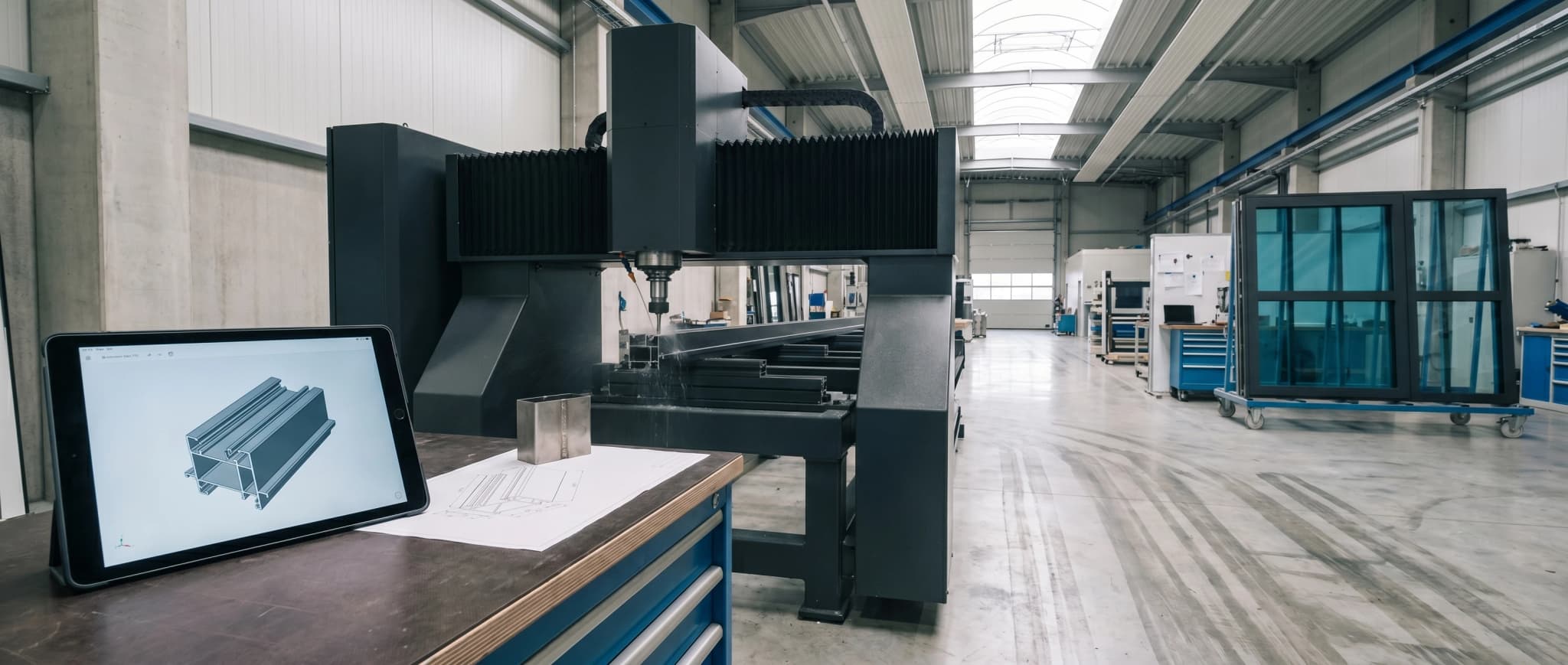
Each profile is designed for the real capacities of standard extrusion presses and CNC machining centres of the European market. Bend radii, wall thicknesses, drilling spacing, machining tolerances are sized to stay within the envelopes that supply chains can produce without prototype fabrication. This upstream discipline eliminates production reworks.
Scope
EU standard extruders + CNC
Discipline
No prototype
RadiiWall thicknessesDrillingMachining tolerances
File-to-factory workflow, three fabrication stations in perspectiveIMG.015a
02· Plate, file-to-factory

From 3D model to direct production data.

No intermediate 2D drawing. No manual rekeying. No information loss at each translation. Four stages structure the workflow.

§ 01Digital workflow in four stages

Parametric design in the native 3D environment (Rhino, Grasshopper or equivalents). Computational optimisation (geometric rationalisation and DFMA integrated into the parametric model). Direct export to machining formats (IGES, STEP, DWG 3D, native CAM formats). Integration with the machines of partner manufacturers (five-axis CNC, aluminium machining centres, glass cutting lines, welding robots). Each produced part is linked to its model and source parameters, for full traceability.

§ 02Why it is critical

File-to-factory eliminates translation errors between design and fabrication, statistically a major source of defects and claims on complex facade projects. It accelerates lead times (from design to machine in days rather than weeks). It ensures full traceability of produced components. It provides real flexibility on late modifications: a correction in the parametric model propagates automatically to the workshop without human rekeying.

§ Plate 03 · Industrial capabilities

Six capabilities mobilisable.

06 categories

Through our Tier-1 European network of industrial partners, we mobilise six categories of capabilities on projects that require them.

01 / / 06EXTRUSION

Extrusion and load-bearing profiles

Bespoke profiles in aluminium, steel, stainless steel, glulam timber, pultruded GFRP.

German, Belgian, Italian and Polish aluminium extruders with presses suited to very large-format profiles for signature projects. Steel and stainless steel rollers and section makers (long-span structural sections, bespoke alloys). European glulam producers (laminated timber, LVL, CLT panels). GFRP pultruders (corrosion-resistant continuous profiles). Anodising, polyester powder-coating, brushed finishes, hot-dip galvanising, surface treatments.

02 / / 06CNC

Multi-axis CNC machining

Millimetric precision on mullions, nodes, connections.

European five-axis machining centres mapped and activable according to the geometry to produce. Bespoke connection parts, structural anchorages, technical alloys.

03 / / 06GLASS

Glass processing

Tempering, PVB/SentryGlas lamination, bending, screen-printing.

Furnaces with variable capabilities: jumbo glazing beyond six metres, curved glass beyond certain radii. Mapping of suited furnaces is a component of our procurement.

04 / / 06ADDITIVE

Metal additive manufacturing

Non-standard nodes that do not justify dedicated extrusion.

Metallic 3D printing for connection geometries inaccessible by traditional processes.

05 / / 06ROBOTIC

Robotic assembly

Welding, riveting, structural bonding in controlled environment.

Robotic assembly lines improve repeatability and quality on series-produced elements.

06 / / 06COMPOSITES

Composite processing

UHPC, fibre composites, sandwich panels with structural core.

Ultra-high performance concrete, fibre composites for structural or skin applications, sandwich panels. Alternative constructive registers when geometry or performance demand them.

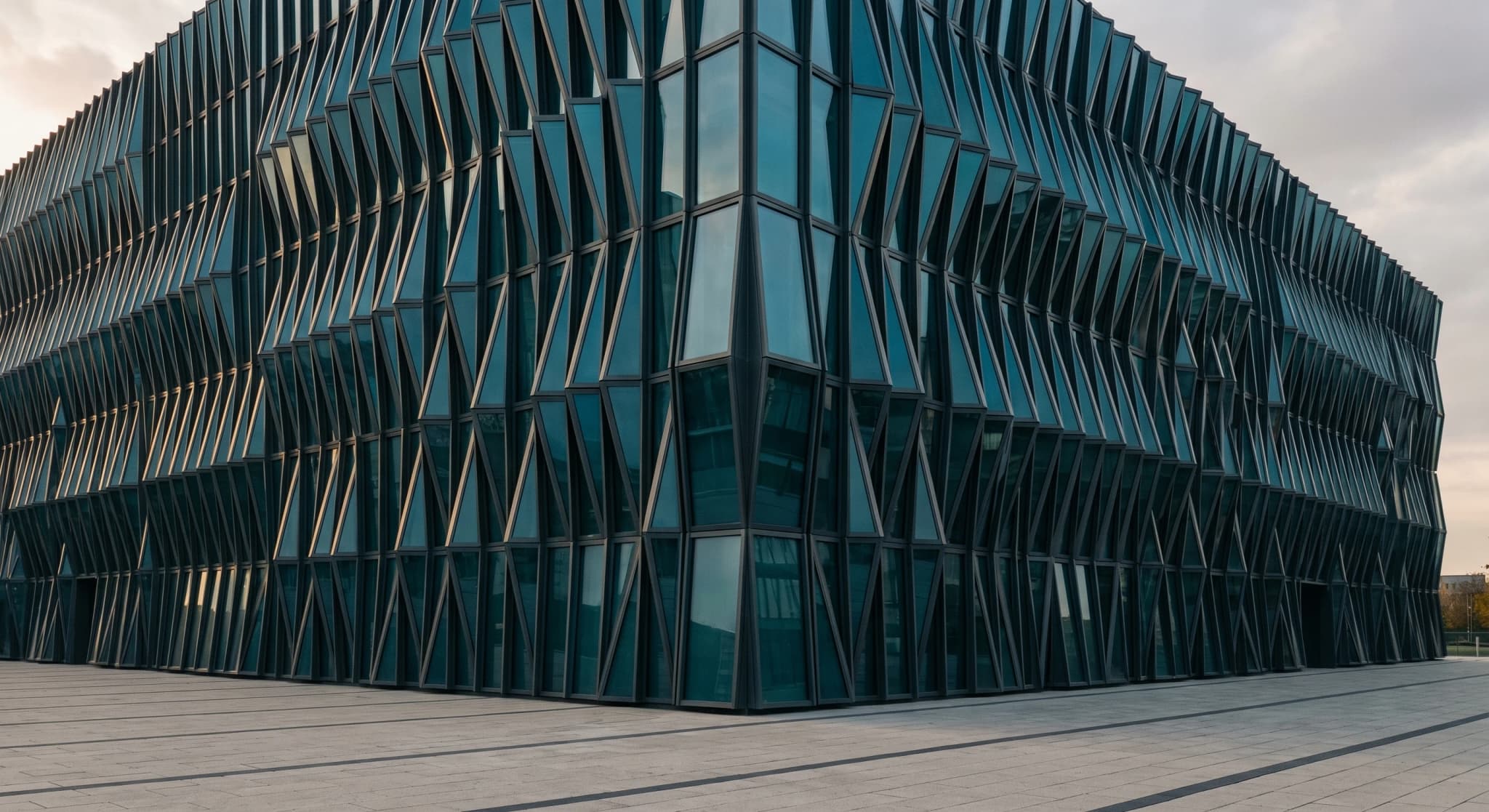
Real facade project off the file-to-factory chainIMG.015b
05· Plate, advantages by client profile

Concrete benefits by client profile.

DFMA and file-to-factory bring distinct concrete benefits according to the client profile. Four profiles served.

01 / / 04ARCHITECTS

Signature architects

Genuinely ambitious geometries without compromise: what is drawable is fabricable. Classic VE cuts reduced because industrial cost is mastered upstream.

Ambition preservedVE−Industrial cost upstream
02 / / 04OWNERS

Owners

Measurable superior quality (industrial precision), secured budget (claims fall), mastered schedule (factory prefabrication in parallel with the shell).

QualityBudgetSchedule
03 / / 04GC / TC

General & total contractors

Reduced risks on the facade package (which concentrates the majority of claims), defects detected in factory, just-in-time logistics.

Risks−Factory defectsJIT
04 / / 04FACADE CO.

Facade contractors and glass envelope contractors

Move upmarket toward iconic projects via computational and file-to-factory support. Improved margins, differentiation against traditional 2D workflow.

Move upmarketMargins+Differentiation
§ Structural equation
Industrial precision replaces site craftsmanship on items that allow it; defects are detected in the factory, not after handover.
06· Plate, what sets us apart

What makes the practice tenable.

Four elements make our DFMA and file-to-factory practice operationally tenable where most engineering firms claim it without serving it. The first, posed upfront, is our direct industrial anchor; three others complete it.

Distinctive element · 01 / 04

We know how to manufacture, not only to design.

Seventeen years in the envelope industry, including several years in pre-construction with a Tier-1 international contractor in glass envelope works, give the knowledge of what is actually produced: extrusion press tolerances, glass processing limits, the kinetics of an assembly line, the frequent failure modes in production. Designing from the factory, not for the factory.

02 / 02Distinctive element

Supplier neutrality

No affiliation with extruder, system supplier, glass processor, manufacturer.

No affiliation with an extruder, a system supplier, a glass processor or a component manufacturer. Mobilisation of an industrial capacity is done on performance criteria at the service of the project, not on prior commercial agreement. See Technological neutrality.

No affiliationPerformance criteriaNo kickback
03 / 03Distinctive element

Multi-supplier agility

Mapping of supply chains adapted to the project, arbitration based on real market conditions.

We adapt to the capabilities of industrial partners available for a project: mapping of supply chains relevant to the requested geometry and volume, arbitration of allocation choices based on real market conditions. We do not impose a fixed ecosystem on the project.

MappingMarket arbitrationNo fixed ecosystem
04 / 04Distinctive element

Systems thinking

DFMA articulated with project economics, carbon strategy, site logistics, contractual frame.

DFMA is not an isolated technical exercise: it articulates with project economics (industrial shadow pricing), with carbon strategy (low-carbon sourcing), with site logistics and with the contractual frame. Coherence across these registers is what makes the method operational.

Project economicsCarbonLogisticsContract
07· Plate, continue reading

Continue reading.

This discipline fits within our whole envelope practice. Nine entry points to explore the immediate sister pages and related pages.

A project to industrialise from design to factory?

A free-form geometry project to rationalise, a unitised facade prefabrication to frame, a file-to-factory workflow to structure for a facade contractor or a manufacturer. Describe the project and the stage. We come back with a technical read on industrial feasibility and on the suited industrial partners.

Industrialisation brief
Shili & PartnersA Shili Build Ventures company