Expertises/Passive security/Blast · Ballistic · Fire

Security & resilienceengineering :blast, ballistic, fire.

Protecting without imprisoning. We engineer envelopes that resist extreme threats (explosions, ballistic impact, fire propagation) without compromising architectural transparency or occupant comfort. Our scope combines blast and ballistic design per UFC 4-010-01, GSA TS-01 and ISO 16933, with facade fire safety under NFPA 285 and progressive-collapse considerations on envelope-to-structure interfaces. Integrated from sketch phase, never retrofitted as a late-stage overlay.

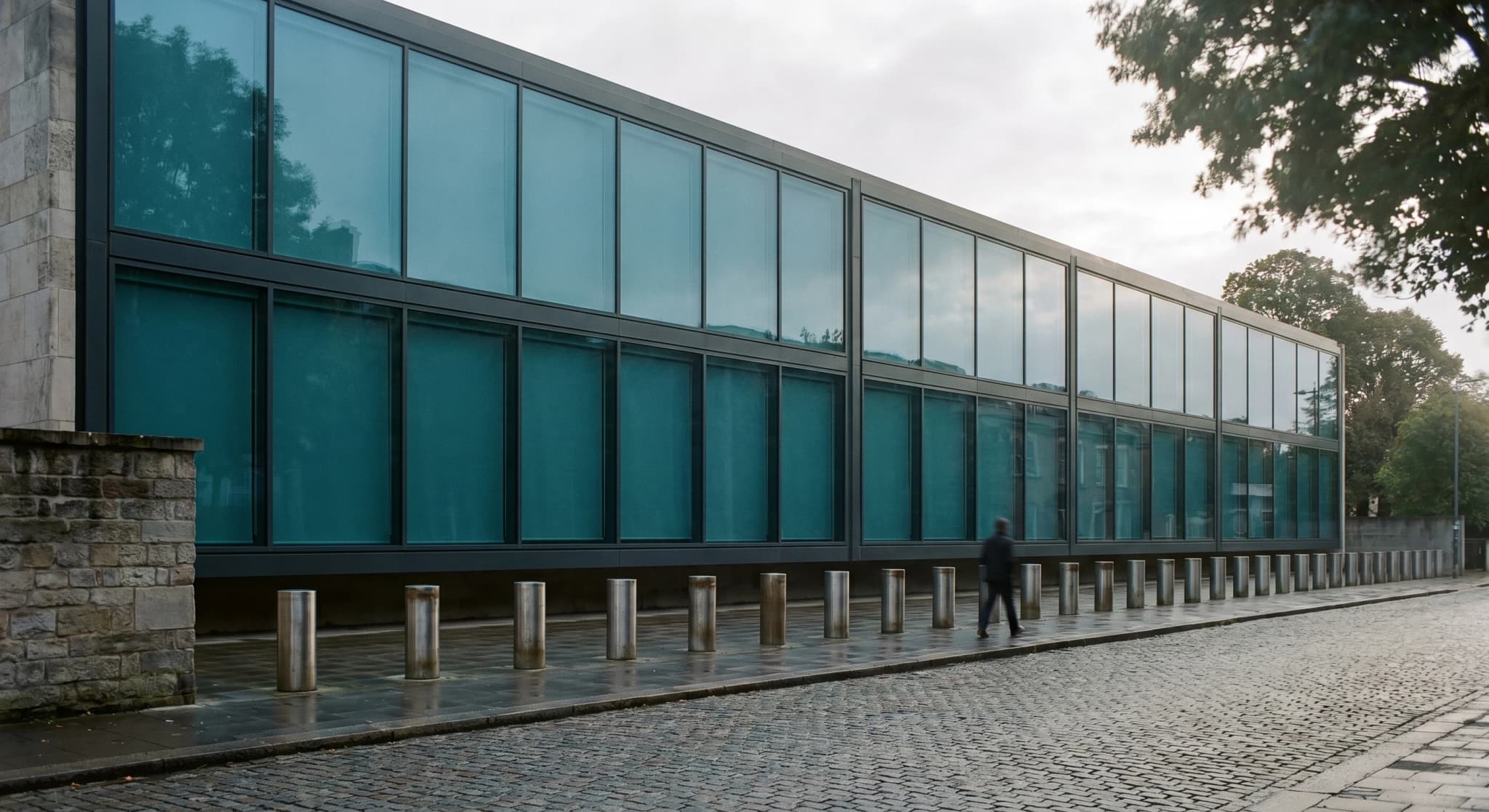
Blast-resilient facade, institutional building with integrated stainless bollardsPL.021 · Blast
01 / 02Institutional blast-resilient facade with integrated bollards.
© S&P · Sprint 3
01Plate 01 / 09, UFC 4-010-01

UFC 4-010-01, DoD antiterrorism standards.

The reference frame for US Department of Defense projects and DoD-partner facilities worldwide. Six categories of minimum protection define the scope.

Six minimum protection categories

The Unified Facilities Criteria 4-010-01, DoD Minimum Antiterrorism Standards for Buildings defines minimum levels of protection across six categories: standoff distance, building-component performance, mass-casualty prevention, progressive-collapse prevention, access control and blast-resistant design.

01 / 01UFC scope

Full envelope UFC scope.

Components, progressive-collapse, mass-casualty prevention.

Our practice covers the full UFC 4-010-01 envelope scope. Facade components (glazing, framing, anchorages) dimensioned to the reference threat level per the Antiterrorism Operational Requirements (OR) of the project. Progressive-collapse verification on envelope-to-structure interfaces, to ensure that local envelope failure does not trigger disproportionate structural damage. Mass-casualty prevention through glazing fragment-retention design, anchor dissipative zones, and debris-trajectory analysis.

UFC 4-010-01 applies to all new DoD inhabited buildings above a threshold, to major renovations, and to host-nation projects where DoD personnel are stationed. On embassy and diplomatic facilities, it interlaces with SECCA and with the receiving nation's own security frameworks.
Trigger
DoD inhabited > threshold
Interlace
SECCA + host nation
AT/FPOR levelsHost-nation
02Plate 02 / 09, NFPA 285

NFPA 285, facade fire safety.

The dominant US reference for facade fire safety. Applies to wall assemblies containing combustible materials and requires performance testing on standardised mock-ups.

Test scope and trigger

NFPA 285, Standard Fire Test Method for Evaluation of Fire Propagation Characteristics of Exterior Wall Assemblies Containing Combustible Components, applies to wall assemblies that contain combustible materials (foam insulation, composite panels with combustible cores, certain weather-resistive barriers) and requires performance testing on a standardised wall mock-up before use on buildings above a certain height or in certain occupancies.

01 / 01NFPA practice

Compliance from design through handover.

Pre-design analysis, specification, engineering judgments, AHJ coordination.

Pre-design analysis of the assembly to identify components that trigger NFPA 285 applicability. Specification of NFPA 285-compliant wall assemblies, tested combinations of insulation, weather barrier, cladding and framing that carry a valid test report from a recognised laboratory. Engineering judgments for project-specific deviations from tested assemblies, when supported by the assembly manufacturer and approved by the Authority Having Jurisdiction (AHJ). Coordination with architectural intent to avoid late-stage specification changes that trigger retesting.

NFPA 285 articulates with other facade fire codes across jurisdictions: BS 8414 (UK), ISO 13785 (international), DIN 4102 and EN 13501 (Europe), with different test protocols and acceptance criteria. Our multi-jurisdictional command of the frames avoids surprise when a project crosses multiple regulatory regimes.

AHJ
Authority coordination
Multi-juris
EU + UK + International
BS 8414ISO 13785DIN 4102EN 13501
03Plate 03 / 09, Blast & ballistic

Blast & ballistic design.

The blast and ballistic design sequence unfolds in four phases, from threat analysis to laboratory certification.

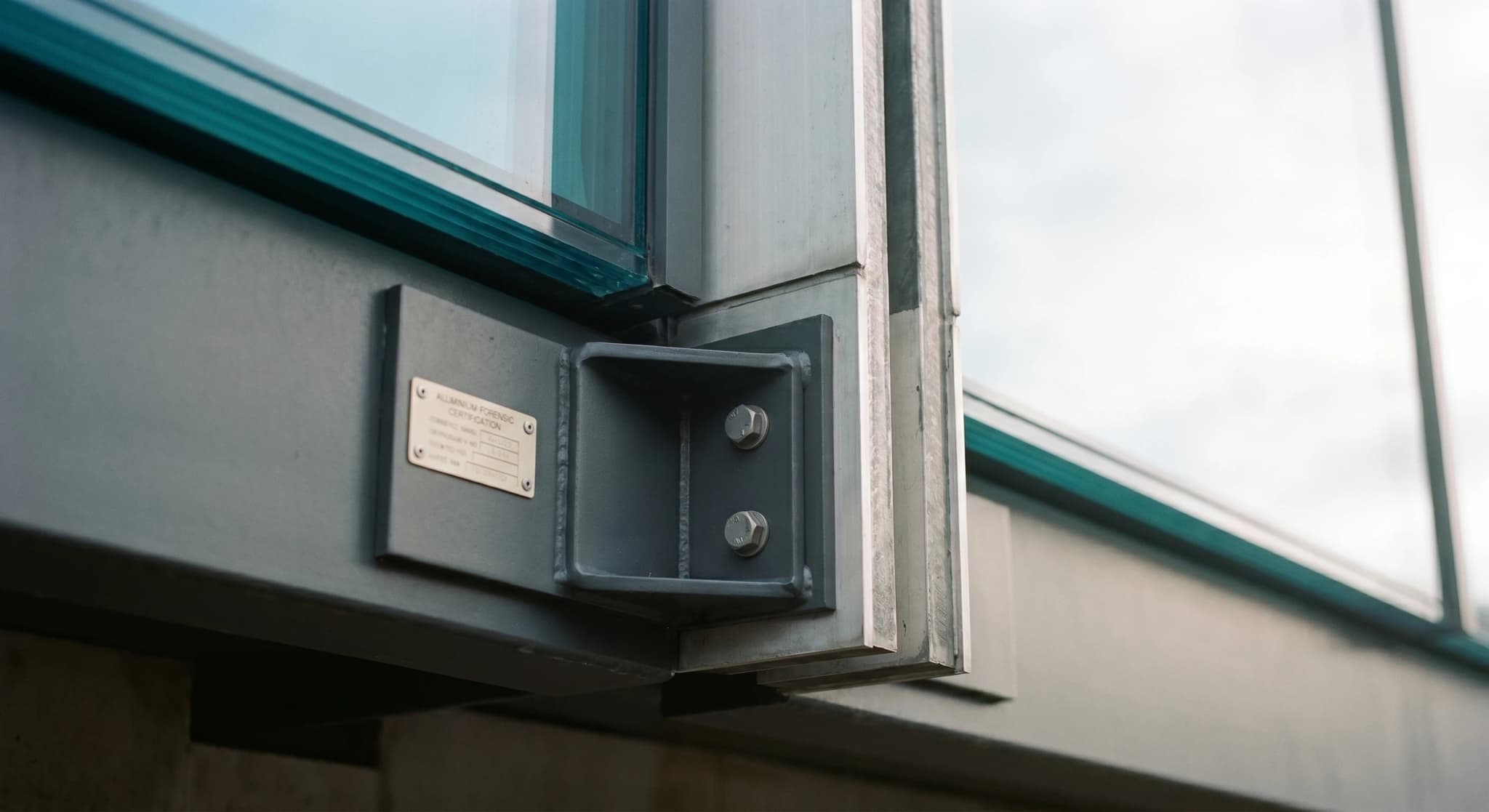
Dissipative welded steel anchor, blast resilience engineering detailFIG. 03 · Anchor
02 / 02Dissipative steel anchor, controlled deformation zone.
© S&P
01
Threat analysis

Documented evaluation of scenarios before any design. Typology of applicable threats: vehicle-borne IEDs (VBIED) at various standoff distances, hand-delivered devices close to the building, sectoral accidental explosions. Reference scenarios to protect against. Performance thresholds: envelope structural integrity, occupant protection (fragment-projection limitation), operational continuity post-event. Target protection level mapped to GSA, ASTM, UFC, ISO scales.

02
Advanced FEA simulation

Finite-element modelling at industrial or defence grade. Blast-wave propagation simulation on the specific building geometry: reflections, channelling, local amplifications. Envelope dynamic response: deformations, ruptures, fragment trajectories. Ballistic impact simulation on glazing and framing components for projectiles within the relevant FB class per EN 1522-1523.

03
Solution design

Blast-resistant glazing: multi-layer laminated glass with high-grammage PVB interlayers, SGP (SentryGlas Plus), ionoplast interlayers, fragment-retention films where relevant, dimensioned to peak pressure and impulse. Energy-absorbing anchorages: mechanical dissipative systems (controlled crumple zones), preserving envelope integrity without transmitting full load to primary structure. Anti-fragmentation films for retrofit. Reinforced framing: mullions transmitting loads with discrete reinforcement integration.

04
Testing and qualification

Wind-tunnel tests or field blast tests on full-scale mock-ups per ISO 16934. Qualification under standards activated by jurisdiction (GSA TS-01, UFC 4-010-01, ISO 16933). Certification by independent laboratories: CSTB, BRE, DHS-recognised facilities, and others certified for blast testing.

§ From method to mission
The method covers analysis, simulation, design, qualification. Reaches its field of application: eight building configurations regularly mobilise extreme-resilience envelope engineering.
04Plate 04 / 09, Embassies

Embassies & sensitive buildings.

Eight project configurations regularly mobilise extreme-resilience envelope engineering. They share a tangible risk profile documented by competent services or required by jurisdiction.

01 / 08Diplomatic

Embassies & missions

UFC 4-010-01 and GSA TS-01 apply under host jurisdiction.

UFCGSA
02 / 08Public

Government headquarters

Parliaments, ministries, security-profile prefectures.

State
03 / 08Corporate

Major corporate HQs

Central banks, systemic institutions, energy, defence majors.

Systemic
04 / 08IO

International organisations

UN, WTO, ICRC, specialised UN agencies (Geneva, Vienna).

UNWTO
05 / 08Critical

Critical infrastructure

Command centres, classified data centres, strategic telecom.

Tier IV
06 / 08Finance

Exposed financial sites

Trading floors, exchange HQs, critical back-office buildings.

Trading
07 / 08Public space

High-risk public spaces

Airport terminals, signature high-speed stations, prestige stadiums.

Hub
08 / 08UHNWI

UHNWI residences

Elevated risk profile. RC4-RC6 plus context-adapted blast level.

RC4-RC6VBIED
En savoir plus
05Plate 05 / 09, Progressive collapse

Progressive collapse.

The propagation of a local structural failure through the building. Central to post-blast scenarios where the initiating event damages a limited zone, and the remaining structure must absorb load redistribution or collapse progressively.

Three envelope contributions

Envelope engineering contributes to progressive-collapse resistance on three registers: envelope-to-structure anchorage design, ensuring detachment under blast does not overload adjacent structural elements with uncontrolled loads ; facade as a secondary load-path, on certain structural systems the envelope participates in global stability through bracing or diaphragm action, and its post-damage residual capacity must be calculated ; debris-trajectory control, blast fragments from the envelope must not compromise adjacent structural elements or critical egress paths. Our FEA simulations integrate the envelope-structure coupling, validated against UFC 4-023-03 (Design of Buildings to Resist Progressive Collapse) or equivalent European frames.

06Plate 06 / 09, Methodology

Integrated methodology.

Four capabilities structure the integrated methodology our atelier applies to extreme-resilience missions.

01 / 04Right-sized

Right-sized engineering

Over-engineering costs material, fabrication, integration.

Calibration of protection level to documented real threat. Substantiated threat analysis justifying every technical choice: method discipline protecting both budget and building.

Risk-based
02 / 04Integration

Architectural integration

Blast and ballistic protection must be invisible.

Solutions preserving fineness of profiles, glazing transparency, finish quality, facade proportion and composition. Architect keeps aesthetic control; protection is integrated, not imposed.

Invisibility
03 / 04Design team

Design-team interface

Peer-to-peer with architects and design-team leads.

Integrate protection from sketch phase, not as late-stage overlay when fundamental choices make efficient protection impossible at reasonable cost.

SketchConcept
04 / 04Neutrality

Supplier neutrality

No exclusive partnership.

Blast glazing manufacturer, reinforced framing supplier or anti-fragmentation film vendor: combination adapted to each project, from documented competitive benchmarking.

Open arbitration
En savoir plus
07Plate 07 / 09, Distinction

What sets us apart.

Command of blast engineering on the envelope is rare: it combines explosion physics, laminated-glass dynamic behaviour, dissipative-anchorage mechanics, and signature-architect coordination on sensitive projects.

Our DNA, founder formula

Seventeen years in the envelope industry, including several years in pre-construction with a Tier-1 international contractor in glass envelope works.

This trajectory gives us knowledge of the real capabilities of laminated-glass high-performance manufacturers and of the limits of transformation processes. A blast-resistant glazing must be fabricable at the requested scale, deliverable on site without degradation, installable on a compatible dissipative anchorage: constraints only an industrial practice of the envelope can arbitrate.

01 / 02Computational

Native computational practice

FEA integrated into the atelier, not subcontracted.

Parametric design models communicate directly with blast simulation environments, enabling design iteration that accounts for anti-blast performance at each variant.

FEAIterative
02 / 02Network

Expert partner mobilisation

Defence-grade simulation labs, blast firms, certified test labs.

Activated on competitive benchmarking per project requirements, for hyper-specialised analyses.

NetworkBenchmarking
En savoir plus
08Plate 08 / 09, Confidentiality

Confidentiality, by nature.

Blast and ballistic resilience missions are sensitive by nature. Threat scenarios, target protection levels, residual vulnerabilities of a building: each can, if leaked, reduce the effective protection of the project.

Confidentiality discipline

Systematic NDA before any detailed technical conversation. Dossier isolation within the atelier: only mission participants access deliverables, with documented traceability. Transmission of sensitive information exclusively on secure channels. Document retention and destruction per policies agreed with the owner. No public reference nor commercial publication without explicit written consent.

09Plate 09 / 09, Articulation

Continue reading.

This specialty connects with our other expertises and engineering methods. Six canonical entries.

01 / 06Neighbour

Anti-intrusion RC4-RC6

Forced-entry resistance per EN 1627, classes RC4 to RC6.

EN 1627
En savoir plus
02 / 06Glass

Structural glass & Jumbo Glazing

Large-format glazing, DIN 18008, EN 16612, up to 3.2 × 18 m.

DIN 18008
En savoir plus
03 / 06Core

Technical engineering

Structural, thermal, computational, interface design.

SIAEurocodes
En savoir plus
04 / 06Standards

Standards & referentials

Multi-jurisdictional: SIA/MoPEC, Eurocodes/EN, FIDIC/AAMA/ASTM.

Multi-juris
En savoir plus
05 / 06Doctrine

Technological neutrality

No hidden commissions, no captive system: open arbitration.

Zero affiliation
En savoir plus
06 / 06Profile

Owners & investors

Value protection, asset engineering, independent audits.

Asset
En savoir plus

A risk-profile project to instruct?

An embassy, an institutional or financial headquarters, a high-risk-profile building. Describe the context and the target protection level. Systematic NDA from the first sensitive exchange. Absolute confidentiality.

Confidential brief
Shili & PartnersA Shili Build Ventures company