Expertises/Energy-generating envelope/BIPV · Integrated photovoltaics

BIPV & energy-generatingenvelope.

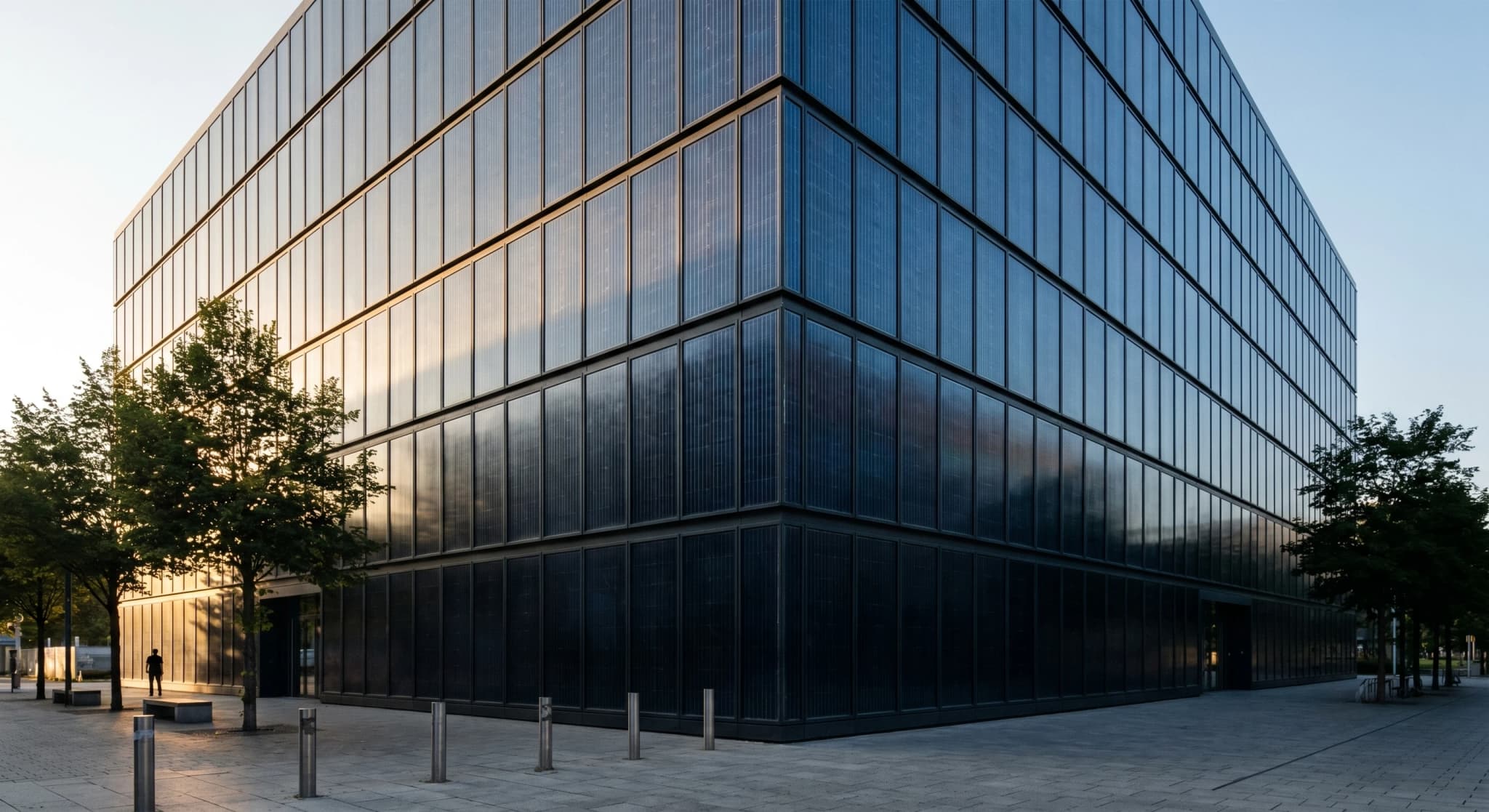
BIPV, Building Integrated Photovoltaics, designates the aesthetic and technical integration of photovoltaic production within the facade (not bolted onto it), transforming the passive envelope into a productive asset. Our missions cover integration of silicon cells (mono and poly), CIGS, CdTe, OPV, semi-transparent cells and perovskites; active thermal management by double-skin and piloted inertia; electrical dimensioning and energy business case; alignment with EU Taxonomy, MoPEC, RE2020, LEED and BREEAM.

BIPV midnight-blue facade, contemporary building with photovoltaic panelsPL.026 · BIPV
01 / 02Monocrystalline silicon BIPV facade, homogeneous midnight blue.
© S&P · Sprint 3
01Plate 01 / 07, Technologies + Integrations

What we integrate.

Three registers compose a BIPV mission: photovoltaic technology (cells, modules), architectural integration types (facade, balcony, railing, pergola), and active thermal management that extends performance beyond pure electrical generation.

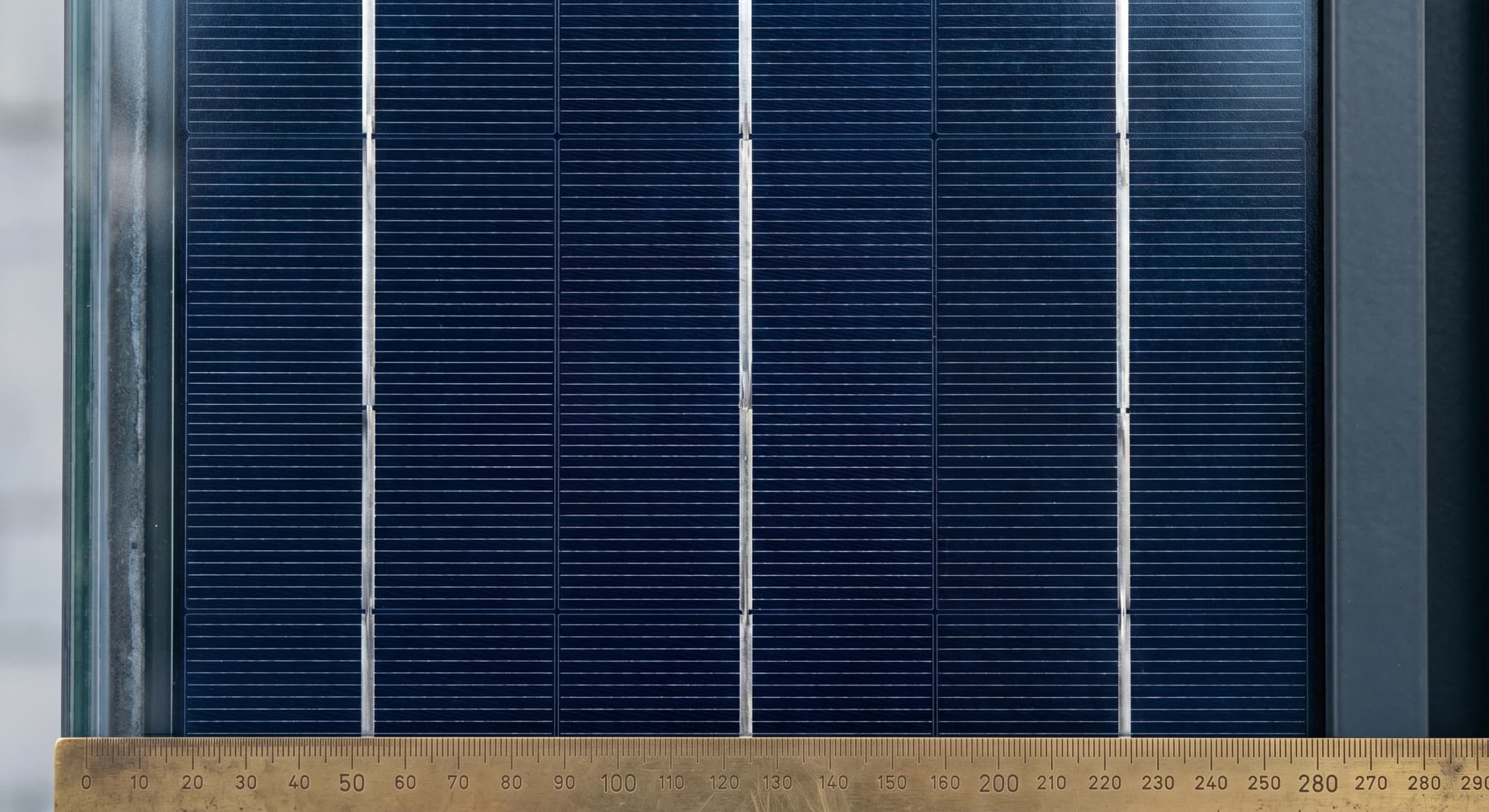
BIPV photovoltaic cell, silver busbar grid on monocrystalline siliconFIG. 01 · Cell
02 / 02Monocrystalline silicon cell with silver busbars, integration in laminated glass.
© S&P
01 / 01Technology family

Classic cells in glazing.

Monocrystalline and polycrystalline silicon, laminated integration.

Monocrystalline silicon: high efficiency (eighteen to twenty-two percent), dark blue or black colour. Polycrystalline silicon: standard efficiency (fifteen to eighteen percent), mosaic appearance. Integration in laminated glazing, cells sandwiched between two glass layers.

Mono SiPoly SiLaminated
02 / 02Technology family

Thin-film cells.

CIGS, CdTe, OPV: homogeneous aspects, open palettes.

CIGS (Copper Indium Gallium Selenide): dark homogeneous appearance, coherent aesthetic integration. CdTe (Cadmium Telluride): stable performance, controlled cost. OPV (Organic Photovoltaics): flexibility, semi-transparency, colour palette.

CIGSCdTeOPV
03 / 03Technology family

Semi-transparent cells.

Explicit trade-off between transparency and production.

Thin cells allowing partial vision through the glazing. Functional screen-printing combining decorative and photovoltaic functions. Explicit trade-off between transparency and production.

Partial visionScreen-printingDécor + PV
04 / 04Technology family

Emerging technologies.

Perovskites, tandems, integrated solar concentration.

Perovskites (strongly rising efficiency, durability questions to instruct). Tandem cells: record combined efficiency. Integrated solar concentration.

PerovskitesTandemConcentration
01·bSub-plate 01·b, Integrations

Types of integration.

Seven architectural integration contexts cover nearly all BIPV projects.

Seven integration contexts

Vertical facades: curtain wall with integrated photovoltaic panels. Opaque photovoltaic facades: cladding of solid walls. Semi-transparent glazing: glazed balcony with production and partial vision. Railings and guardrails: production on horizontal elements. Pergolas and canopies: combination of shade and production. Roofs (boundary between BIPV and BAPV, Building Added PV). Photovoltaic membranes for textile structures, see Textile membrane structures.

Four active thermal levers beyond PV

Beyond pure photovoltaics, the generative envelope can integrate thermal recovery in double-skin facades (heated air between the two skins recovered for heating), night ventilation (thermal discharge for passive cooling), piloted thermal inertia (phase-change materials integrated in profiles), solar thermal capture via integrated vacuum tubes or flat collectors.

02Plate 02 / 07, Applications

Typical applications.

Five configurations regularly mobilise a BIPV strategy. They differ by their energy profile, patrimonial constraints and ESG sensitivity.

01 / 05Corporate

Corporate headquarters

Strong ESG positioning, important energy usage.

Rapid BIPV profitability on own-consumption: data centres, IT, long-duration cooling.

ESGSelf-consumptionTech
02 / 05Public

Public buildings

Rising regulatory obligations.

Mandatory solar on certain new buildings in several European countries and Swiss cantons (MoPEC, RE2020).

MoPECRE2020
03 / 05Tower

Tertiary towers

Massive surfaces, substantial potential.

Patrimonial valuation through EU Taxonomy and energy certifications. Production on gable walls integrated to tenant strategy.

EU TaxonomyBREEAM
04 / 05Heritage

Heritage renovations

Discrete tints and semi-transparent glazing.

Allow adding production to historic buildings without denaturing listed architecture. Heritage commission approach.

ListedHeritage
05 / 05Net-zero

Net-zero or energy-positive

BIPV often a necessary condition.

On-site renewable production offsets a share of operational consumption over the annual cycle.

Net-zeroBEPOS
03Plate 03 / 07, Value added

Our value added.

Three contributions distinguish our BIPV practice. They verify on every mission: architectural integration, performance engineering, total cost optimisation.

01 / 01Contribution

Architectural integration.

Poorly designed BIPV gives facades a technical and dated appearance.

Our role is to preserve architectural intent: colours, proportions, reflectivity compatible with the design. Hide cabling and inverters in profiles. Unify appearance, no patchwork look between PV and non-PV zones. Integrate from sketch phase, not late when aesthetic integration becomes impossible.

ColoursProportionsSketch
02 / 02Contribution

Performance engineering.

From yield calculation to techno-economic analysis.

Annual energy yield calculation per orientation and tilt. Shading modelling: neighbouring buildings, vegetation, local topography. Inverter and battery sizing when storage is planned. Grid integration: self-consumption, feed-in tariff, collective self-consumption per jurisdiction. Techno-economic analysis with detailed ROI per scenario.

YieldShadingROI
03 / 03Contribution

Total cost optimisation.

BIPV often perceived as expensive because compared to standard glazing.

The fair comparison integrates three factors: BIPV replaces part of the standard facade (avoided cost), produces energy for twenty-five to thirty-five years (revenue or saving), values the asset via energy label and tenant attractiveness. Well designed, the BIPV additional cost versus standard facade typically pays back in eight to fifteen years.

Avoided cost25-35 yr revenueLabel
04Plate 04 / 07, Distinction

What sets us apart.

Three elements structure our BIPV practice: direct knowledge of European manufacturers, strict technological neutrality, native computational practice.

Our DNA, founder formula

Seventeen years in the envelope industry, including several years in pre-construction with a Tier-1 international contractor in glass envelope works.

This trajectory gives direct knowledge of European BIPV cell and module manufacturers (AGC, Ertex Solar, Onyx Solar, Kromatix and equivalents) and of the real capabilities of their production lines.

01 / 02Neutrality

Strict technological neutrality

No partnership with a BIPV manufacturer.

Selection per project among European and Asian actors, on performance, industrial durability and total cost of ownership criteria.

Zero affiliationOpen arbitration
En savoir plus
02 / 02Computational

Native computational practice

Simultaneous optimisation of yield + aesthetic integration.

Allows simultaneous optimisation of solar gains (by orientation, tilt, shading) and aesthetic integration (composition, colours, transparency) at every design iteration.

IterativeMulti-objective
§ From BIPV alone to ecosystem
A generative envelope does not stand alone: it articulates with carbon strategy, the active layer and the material cycle.
05Plate 05 / 07, Articulation

Articulation with other specialties.

BIPV is rarely calculated in isolation. Three canonical articulations pull it toward other expertises of the atelier.

01 / 03Carbon

Carbon strategy

BIPV reduces operational emissions over 25-30 years.

Substantially positive balance despite cell manufacturing footprint. Project-by-project parametric LCA.

LCARE2020
En savoir plus
02 / 03Smart skin

Smart skin & electrochromic

Powerful combination: electrochromic (gain control) + BIPV (production).

Intelligent and generative facade. BMS-integrated piloting for global optimisation.

BMSBACnetKNX
En savoir plus
03 / 03Circular

Circular economy

Circularity applies to PV panels.

Certain manufacturers reclaim their panels at end of life for material recycling and silicon recovery.

EPREoL
En savoir plus
06Plate 06 / 07, Regulatory

Regulatory frames and incentives.

Seven international and national references structure the feasibility analysis of a BIPV project. Each opens up bonifications, thresholds or subsidies to integrate into the business case.

Structuring referentials

EU Taxonomy: alignment criteria for sustainable assets (BIPV accelerates alignment). RE2020 (France): carbon and energy thresholds favourable to BIPV. MoPEC / CECB / Minergie-P-ECO (Switzerland): enhanced labels with on-site energy production. LEED, BREEAM, WELL: substantial points for BIPV. Feed-in tariffs and subsidies: variable by country and region, to integrate into the project business case. See Standards & referentials.

07Plate 07 / 07, Deliverables

Standard deliverables.

Six pieces compose the deliverable package of a BIPV mission. They form a stand-alone dossier, exploitable by downstream packages (electrical engineer, cost manager, general contractor).

Dossier components

Solar potential study: per orientation, shading, expected yield by technology. Integration strategy: aesthetic, technical, economic. BIPV specifications: cells, glass, cabling, inverters. Integration drawings: positions, details, interfaces with electrical packages. Energy business case: production, savings, feed-in, ROI per scenario. Subsidy dossier: for programmes available in the jurisdiction.

08Plate 08 / 08, Articulation

Continue reading.

Five canonical entries to calibrate a BIPV mission or combine it with other envelope registers.

01 / 06Hub

SOTA expertises

Our eight state-of-the-art specialties on risk- or signature-grade typologies.

Hub8 specialties
En savoir plus
02 / 06Carbon

Carbon strategy

Parametric LCA, low-carbon sourcing, MoPEC/RE2020/EU Taxonomy compliance.

LCAEPD
En savoir plus
03 / 06Active

Smart Skin & electrochromic

Dynamic facade: dynamic glass, BMS control, BACnet/KNX integration.

BMSBACnetKNX
En savoir plus
04 / 06Circular

Circular economy

Design for disassembly, EPD, circularity: ISO 20887, Cradle to Cradle.

ISO 20887C2C
En savoir plus
05 / 06Textile

Textile membrane structures

Free-form ETFE/PTFE/PVC: stadiums, atria, canopies.

ETFEPTFEPVC
En savoir plus
06 / 06Profile

Owners & investors

Owner profile: value protection, asset engineering, independent audits.

AssetAudit
En savoir plus

A BIPV project to instruct?

A corporate headquarters, a tech campus, a tertiary tower, a public building or a heritage project to equip with an energy-generating facade. Describe the project, the orientation, the target energy objective. We come back with a solar potential study and prospective BIPV manufacturers.

BIPV brief
Shili & PartnersA Shili Build Ventures company