Expertises/Life cycle/Circular · Urban mining

Circular economy& Design for Disassembly.

The contemporary envelope is designed never to become waste : its components retain a commercial and functional value at end of life, and return to the industrial circuit at their highest possible value. Our practice combines Design for Disassembly, digital material passport, strategic low-carbon sourcing, and documented end-of-life protocol from the design phase. Activated frames : ISO 20887, Cradle to Cradle Certified, Level(s), EU Taxonomy, Minergie-P-ECO, DGNB, BREEAM and LEED.

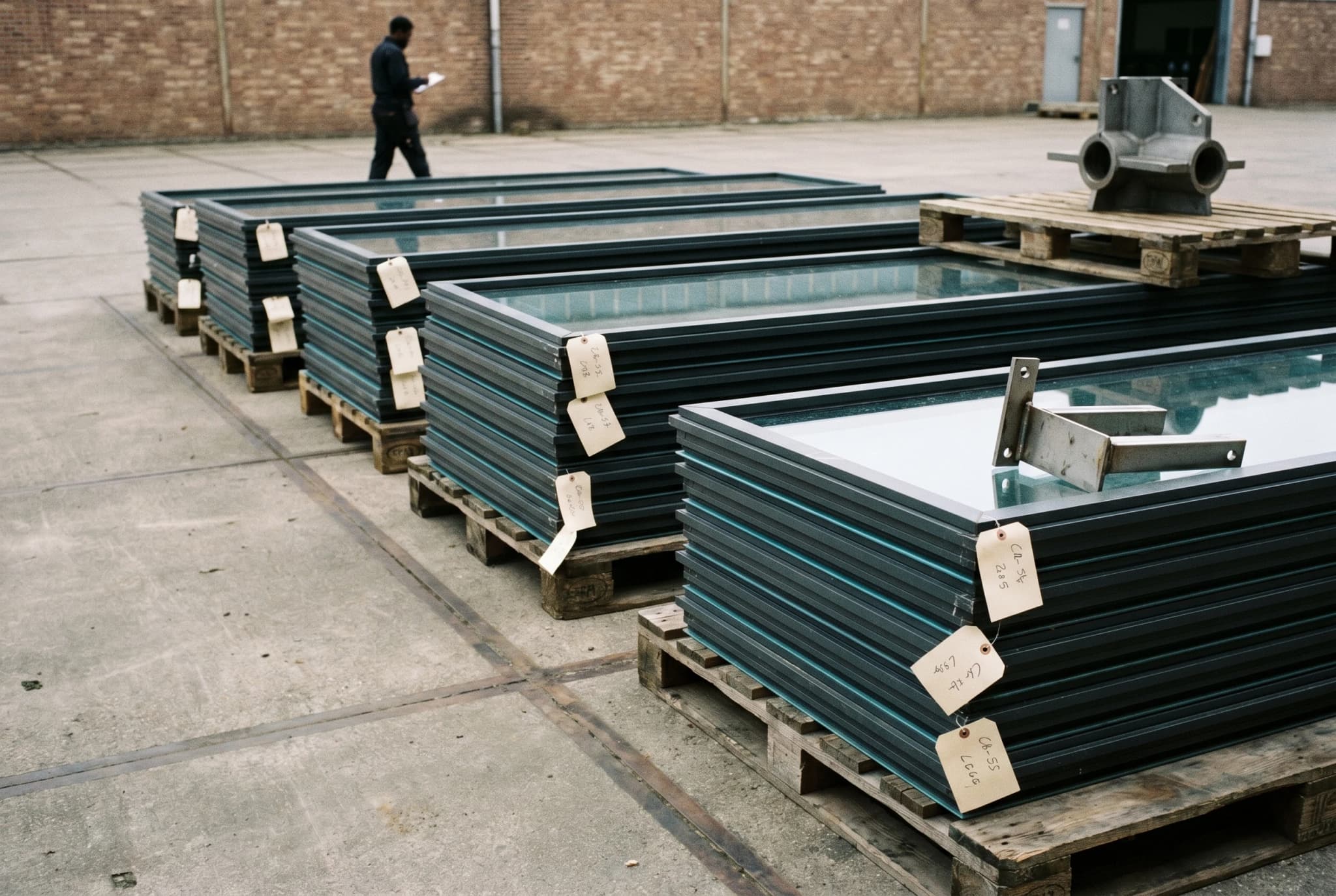
Circular economy, dismounted facade panels in stock for reusePL.027 · Circular
01 / 02Stock of dismounted panels for reuse.
© S&P · Sprint 3
01Plate 01 / 08, Principle

The principle.

The traditional industry operates in linear economy (raw material, fabrication, use, demolition, waste). The building is demolished at end of life, materials are crushed or sent to landfill, the energy and material loss is massive, the carbon balance is heavy.

Reversal of the sequence

The circular economy reverses this sequence : raw material, fabrication, use, disassembly, reuse or high-value recycling. The envelope is designed to be disassembled, not only demolished. Its components return to the industrial circuit at their highest possible value. The contemporary building is tomorrow's urban mine ; its facade is the most accessible layer.

02Plate 02 / 08, Design

What we design.

Four registers structure circular design on the envelope : Design for Disassembly, material passport, materials designed for the cycle, reuse of existing components.

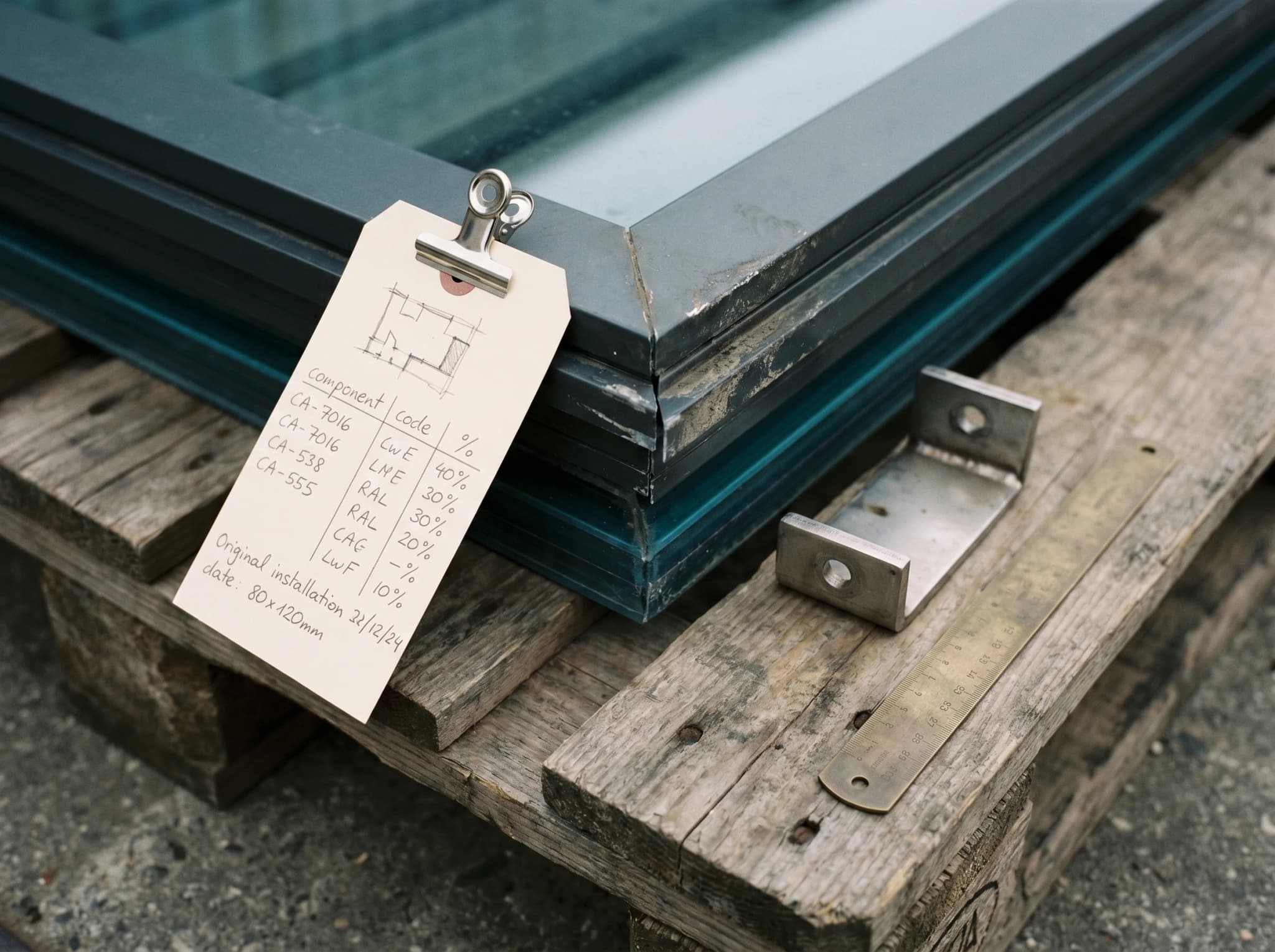
Material passport, forensic tag on dismounted panel with stainless attachmentFIG. 02 · Passport
02 / 02Material passport on dismounted panel.
© S&P
01 / 01Register

Design for Disassembly.

Mechanical assemblies rather than chemical, documented disassembly sequence.

Mechanical assemblies (screwed, clipped, bolted) rather than chemical (glued, welded, irreversible structural silicone). Separable layers, no irreversible composite materials. Maintenance and disassembly access planned from the design phase. Modular dimensioning, standard-dimension components reusable on other projects. Documented disassembly sequence, like a reversed assembly manual. Minimisation of irreversible materials.

Standard
ISO 20887
Test
Reversibility
MechanicalModularDocumented
02 / 02Register

Digital material passport.

Digital document associated with each component, BIM-integrated.

Exact composition (materials, grades, surface treatments). Origin (manufacturer, raw-material supplier). Properties (mechanical, thermal, optical). Assemblies (what is linked to what, how to disassemble). Reuse potential (possible end-of-life uses, estimated residual value). BIM integration via the building digital twin. The material passport is the document that makes the building minable at end of life ; without it, information is lost.

Format
JSON · IFC
Target
Digital twin
BIMCompositionEoL
03 / 03Register

Materials designed for the cycle.

Indefinitely recyclable aluminium, glass cullet, bio-sourced, limited composites.

Aluminium : recyclable indefinitely without quality loss ; priority to recycled aluminium for initial sourcing. Steel : recyclable, more energy-intensive cycle than aluminium. Glass : recyclable into glass (cullet) if separated from other materials ; separation protocols planned from design. Structural wood : reusable if mechanically assembled. Bio-sourced : plant fibres, geo-sourced materials to replace fossil materials on non-structural layers. Composites : avoid as much as possible (irreversible), unless composition allows controlled chemical recycling.

Recyclability
Infinite · cycles
Avoid
Irreversible composites
AluCulletBio
04 / 04Register

Reuse of existing components.

Audit, selective deposition, reconditioning, traceability.

On renovation projects, audit of existing components (condition, residual value, reuse potential). Selective deposition rather than destructive demolition, to preserve valuable elements. Reconditioning (cleaning, testing, certification) for reuse in the new project. Traceability of reused components in the material passport of the new building.

Target
Renovation · Retrofit
Output
Reusable components
AuditSelective depositionReconditioned
03Plate 03 / 08, Method

Project method.

The method unfolds in five phases. Each phase produces a contractual deliverable that becomes the reference for the next phase.

01
Upstream circular strategy

From feasibility or preliminary design phase, definition of circular objectives with the owner: percentages of recyclable materials, reusable components, bio-sourced content. Carbon budget associated with the material strategy. ESG criteria aligned with targeted labels.

02
Modular design

DfD principles applied to all critical assemblies. Geometric grids compatible with standard reusable components. Constructive details drawn to be reversible.

03
Strategic sourcing

Priority to suppliers taking end-of-life responsibility (material take-back, internal recycling). Raw-material traceability (low-carbon aluminium, high-cullet glass). Verified supplier certifications (EPD, Cradle to Cradle).

04
Documentation and passport

Material-passport compilation during construction. Integration into the as-built dossier and BIM model. Transmission to the owner with maintenance and end-of-life plan.

05
End-of-life protocol

Documented end-of-life scenarios (at thirty, fifty, eighty years per patrimonial horizon). Prospective partners for material take-back identified upstream. Macro-estimate of residual value, refreshable.

04Plate 04 / 08, Standards

Standards & referentials.

Seven referentials structure circular analysis. They articulate with the transverse Standards & referentials framework of the atelier.

Seven structuring referentials

Cradle to Cradle Certified : product certification dedicated to circularity. Level(s) (Europe) : European framework for building sustainability. ISO 20887 : Design for Disassembly (standard in rolling diffusion). EU Taxonomy : explicit circularity objective in criteria. Minergie-P-ECO (Switzerland) : includes material criteria. DGNB (Germany) : certification system with strong circular weighting. BREEAM and LEED : credits for circularity and reuse.

05Plate 05 / 08, Value added

Our value added.

Four differentials structure our circular practice : industrial expertise on disassembly, neutrality, credible business case, design integration.

01 / 04Industrial

Industrial expertise on disassembly

Reality of European reuse and recycling supply chains.

We know how to distinguish what is theoretically possible from what is really feasible in a given market, different by jurisdiction, volume size, quality of local supply chains.

EUSupply chains
02 / 04Neutrality

Neutrality

No partnership with a recycling provider or circular manufacturer.

Recommendation on documented technical and economic merit.

Zero affiliation
En savoir plus
03 / 04Business case

Credible business case

Circularity is often presented as a cost.

Well designed, neutral to positive on initial CAPEX and substantially positive on long-term patrimonial value. Business case project by project, with documented residual-value assumptions.

Neutral CAPEX
04 / 04Design

Design integration

No contradiction between design and circularity.

Successful circular facades are also those with strong architectural qualities : noble materials, mastered details, visible and elegant assemblies.

Design Integrity
En savoir plus
§ From value to anchorage
Four differentiators structure the practice. Reaches its industrial anchorage: not a declared intent, knowledge of supply chains acquired from the production side.
06Plate 06 / 08, Distinction

What sets us apart.

Three elements make our practice tenable : knowledge of industrial supply chains, strict neutrality, articulation with carbon and DFMA.

Our DNA, founder formula

Seventeen years in the envelope industry, including several years in pre-construction with a Tier-1 international contractor in glass envelope works.

This trajectory gives knowledge of industrial recycling supply chains (aluminium, glass, steel) in Europe and of suppliers that actually carry end-of-life responsibility, distinct from those that commercially claim it.

01 / 02Neutrality

Strict neutrality

Documented competitive benchmarking on real residual value.

Provider industrial capabilities, long-horizon solvency. No hidden partnership with a take-back provider.

Benchmarking
En savoir plus
02 / 02Articulation

Articulation carbon & DFMA

Major lever of patrimonial carbon balance.

Rests on prefabrication and mastered assemblies from DFMA to be operationally tenable.

CarbonDFMA
En savoir plus
07Plate 07 / 08, Articulation

Articulation with other specialties.

Circularity articulates with four neighbouring specialties.

Four canonical articulations

Carbon strategy & decarbonisation : circularity is a major lever of the life-cycle carbon balance. DFMA & File-to-Factory : circularity rests on prefabrication and mastered mechanical assemblies. BIPV, energy-generating envelope : circularity applies to photovoltaic panels ; certain manufacturers reclaim their panels at end of life. Smart skin & electrochromic : electronic components demand a specific end-of-life strategy, electronic design for disassembly and traceability of critical materials.

08Plate 08 / 08, Deliverables

Standard deliverables.

Six pieces compose the deliverable package of a circular mission.

Six canonical deliverables

Material diagnostic : for renovation projects or existing asset audits. Project circular strategy : objectives, quantified targets, action plans by phase. Material passport : structure and content per component, BIM integration. Circular material specifications : requirements for suppliers. End-of-life protocol : scenarios, prospective partners, estimated residual values. Compliance documentation for targeted labels and taxonomies.

09Plate 09 / 09, Articulation

Continue reading.

Six canonical entries to calibrate a circular mission or combine it with other registers.

01 / 06Hub

SOTA expertises

State-of-the-art specialties on risk- or signature-grade typologies.

Hub
En savoir plus
02 / 06Carbon

Carbon strategy

Parametric LCA, low-carbon sourcing.

LCA
En savoir plus
03 / 06DFMA

DFMA & File-to-Factory

Industrialisation from design to factory.

DFMA
En savoir plus
04 / 06BIPV

BIPV facade

Building-integrated photovoltaics.

BIPV
En savoir plus
05 / 06Smart skin

Smart Skin & electrochromic

Dynamic facade, dynamic glass, BMS.

BMS
En savoir plus
06 / 06Doctrine

Technological neutrality

No hidden commission, open arbitration.

Zero affiliation
En savoir plus

A circular project to structure?

A new project to frame in circular strategy from sketch phase, an existing asset to audit for reuse potential before renovation, or a material passport to structure on an asset portfolio. Describe the project and the targeted certification frames. Confidential exchange.

Circular brief
Shili & PartnersA Shili Build Ventures company