Expertises/Entry mission/Systemic diagnostic

Systemic pre-projectdiagnostic.

Most decisions that weigh on the cost and feasibility of a complex envelope are taken before the engineering firm is even mandated. The systemic diagnostic is the entry mission that moves upstream of those decisions, to deliver, in parallel, a technical proof and an economic proof of buildability. Our facade audit and building envelope commissioning framework cover geometry, physics, carbon, economics and risk within a single methodological envelope. The deliverable is a factual base on which the owner, the architect, the general contractor or the investor can engage the next phase of the project, or reframe it.

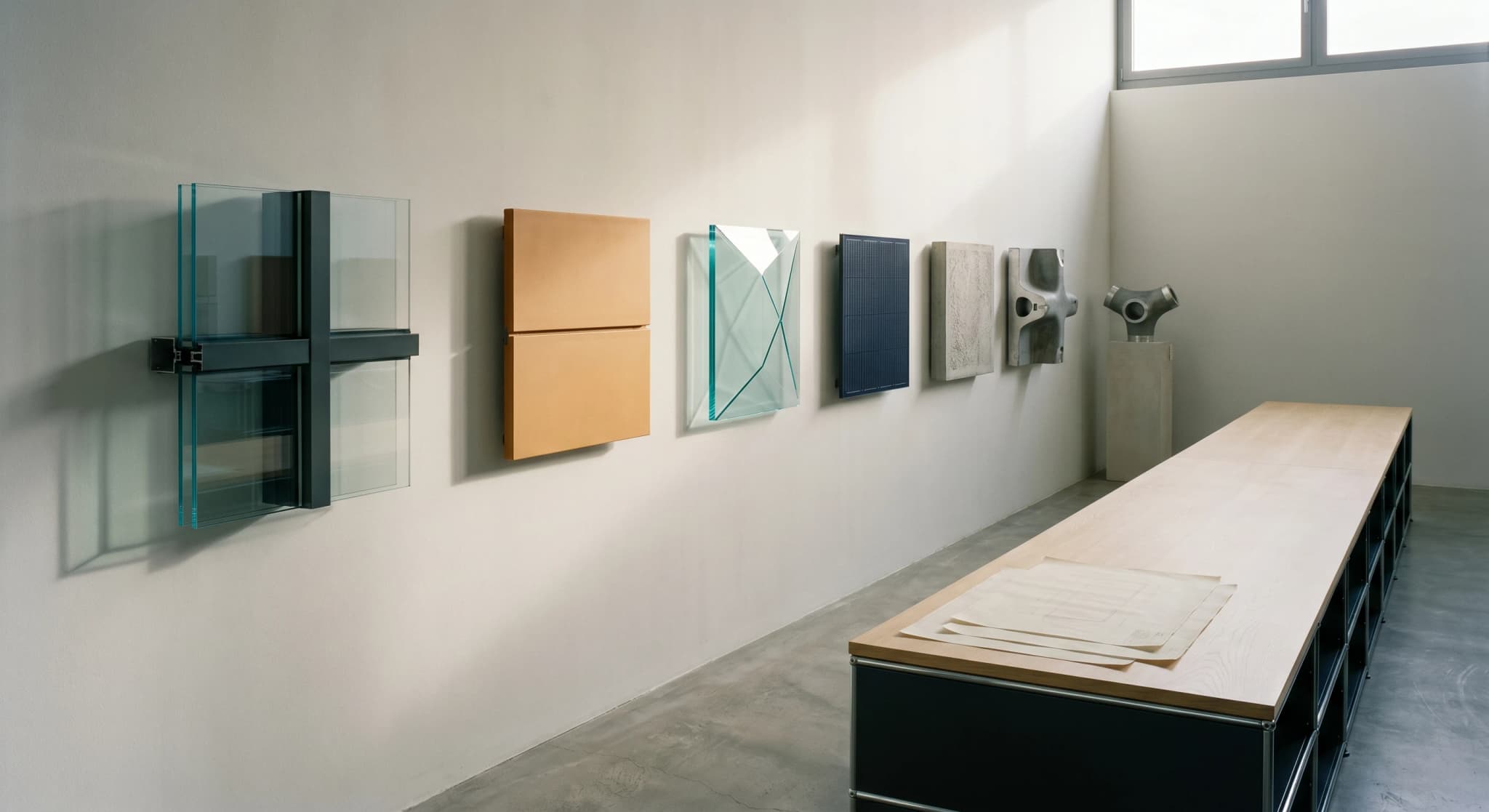
Systemic facade diagnostic session, multidisciplinary teamPL.028 · Diagnostic
01 / 03Diagnostic session, six strands in parallel.
© S&P · Bloc C
01Plate 01 / 10, Positioning

Positioning.

The systemic diagnostic is a framed mission at a controlled cost, on a fixed fee, with a perimeter defined at kick-off. Its purpose is to bring an independent reading before structuring decisions are taken.

Difference from a disciplinary review

The form differs from a classic project review. A review validates or invalidates existing choices along a disciplinary grid (thermal, structural, weatherproofing). A systemic diagnostic rebuilds the reading of the project from the actual constraints (industrial, economic, normative, carbon) and delivers costed alternatives when the initial choices do not hold the budget/design/performance equation.

Six dimensions in parallel

Six dimensions are handled in parallel on the same reference model: geometry and buildability, physics, carbon, economics, risks, recommendations. This parallel handling is what distinguishes the systemic method from a disciplinary audit. When thermal analysis, industrial costing, carbon strategy and contractual risk analysis are conducted in silos by separate teams, arbitrations do not cross each other: the economist optimises without seeing carbon, the thermal engineer optimises without seeing industrial constraints. Parallel handling lets constraints meet during the diagnostic, not after its debrief.

Standalone mission, intrinsic value

It is often the entry door to a broader mandate: Envelope Engineering, Owner's Engineer, Design-Build consortium, investor advisory. But the mission stands on its own value: a well-run diagnostic dossier remains a usable asset for the client, regardless of the decision made on the follow-up.

02Plate 02 / 10, When to mobilise

When to mobilise.

Four situations frame the call for a systemic diagnostic, each with its own calendar, expected deliverables, and typical procrastination risks.

01 / 01Situation

Competition or feasibility stage.

Verify in parallel technical realism, industrial cost, major risks, alternatives.

Before answering a competition or validating a feasibility, the project team seeks to verify several questions at once. Is the envisaged envelope technically realistic? What is its actual industrial cost, not the theoretical cost per square metre? What are the major risks that the upstream phase does not yet see? Which alternatives deliver more value at equivalent budget?

The diagnostic delivers the answers in parallel, on the same methodological base, not in disciplinary silos. Mobilisation timing is critical: too early, project hypotheses are too fragile to be tested; too late, the decision is already made and the diagnostic becomes an ex-post justification tool.

Calendar
Before commitment
Output
Realism + alternatives
CompetitionFeasibilityCritical timing
02 / 02Situation

Preliminary design with budget / design tensions.

Independent arbitration that unblocks, by reframing the problem.

The project has entered schematic or detailed design and classic tensions surface: the cost consultant judges the project will not fit the budget, the architect refuses the proposed cuts, the owner no longer knows which reading to follow. The diagnostic provides an independent arbitration that unblocks the situation, not by choosing between camps, but by reframing the problem.

In the majority of cases, the budget/design gap rests on an implicit untested assumption: a system choice (stick vs unitised, SSG vs mechanically fixed), a rationalisable geometry, an underused supply chain, a thermal performance over-specified against actual regulatory requirements. The diagnostic identifies these tipping points.

Phase
Schematic · Detailed
Lever
Reframe the problem
Schematic · DetailedImplicit assumptionTipping point
03 / 03Situation

Complex tender response by general contractor.

Declared vs actual risk, coherent costing grid before margin commitment.

A general or total contractor wants to respond to a mega-project with a complex envelope package. Its internal engineering team underestimates certain risks (jumbo glazing fabrication, unitised facade logistics, interfaces with structural and HVAC packages), bids received from facade subcontractors look inconsistent between themselves (30-50 % spread on comparable scopes), and the general contractor seeks an independent reading before committing its margin on the dossier.

The diagnostic documents the gap between declared risk and actual risk, and proposes a coherent costing grid for the general contractor, which can then renegotiate with its shortlisted subcontractors on an informed basis.

Profile
GC · TC tender
Output
Independent costing grid
Mega-projectSubcontractor spreadRenegotiation
04 / 04Situation

Pre-acquisition investor audit.

De-risk decision with industrial grid, not commercial.

An investor (real estate fund, family office, institutional actor) evaluates the acquisition of a building. Existing envelope performance, probable renovation costs against regulatory horizons (decree tertiaire DEET in France, MoPEC and CECB+ in Switzerland, EPBD at EU level, MEES in the UK), carbon valuation potential (EU Taxonomy, SFDR, CSRD), exposure to stranded-asset risk over the operating horizon.

The diagnostic de-risks the acquisition decision with an industrial grid, not a commercial one. It typically produces a dossier usable at investment committee, with costed high/mid/low scenarios and a trigger horizon for compliance costs.

Profile
Investor DD
Output
Investment committee
Stranded assetDEET · MoPECEU Taxonomy
Vidéo
The Basics of Building Envelope Commissioning
00:00 / 00:00
03Plate 03 / 10, For whom

For whom.

Four profiles structure our mandators on systemic diagnostic missions. Each profile mobilises a different expectation on the deliverable.

01 / 04Institutional

Institutional owners

Funds, institutional investors, high-end developers, public bodies on landmark projects.

Mobilise the diagnostic before deciding on a full engineering firm mandate, or in parallel with an ongoing preliminary design phase. Expectation: deliverable usable at investment or steering committee, not a technical note reserved for specialists.

ICSteering
02 / 04Architects

Lead architects

Competition or feasibility, independent envelope expertise without proprietary system.

Without affiliation to a system supplier or facade contractor that would colour the recommendations. The mission often combines with their own design team to produce a coherent dossier.

CompetitionFeasibility
03 / 04GC/TC

General contractors in tender phase

Mega-projects with dominant envelope package (20-40 % of contract).

Seek to objectify technical and industrial risk before committing contractual margin, and to hold an independent grid for negotiations with shortlisted facade subcontractors.

20-40 %Margin
04 / 04Investor DD

Investors in due diligence

Real estate, infrastructure, family offices, industrial players.

Prime office, high-end residential, heritage redevelopment, distressed asset. De-risk decision with industrial grid independent from seller's: regulatory exposure, energy upgrade cost, hidden technical risk, value creation potential.

OfficeDistress
§ From who to what
Four profiles mobilise the diagnostic. Reaches what the mission covers: six analysis strands run in parallel on a single reference model.
04Plate 04 / 10, Scope

What the diagnostic covers.

Six analysis strands, handled in parallel on the same reference model. This parallel handling is the main quality lever of the method.

Six-dimension systemic framework, geometry, physics, carbon, economics, risks, recommendationsFIG. 04 · Framework
02 / 03Six-dimension parallel framework.
© S&P
01 / 01Analysis strand

Geometric analysis and buildability.

Geometry decomposition + supply chain mapping + costed alternatives.

Decomposition of the project geometry (curvatures, grids, panels, critical nodes, structural interfaces). Identification of technically critical zones and of zones that can be rationalised without compromising architectural intent. Mapping of European supply chain capacity for each candidate system: unitised curtain wall (Schüco, Reynaers, Wicona, Technal capacity for large-format volumes), stick curtain wall, structural sealant glazed systems on long spans, jumbo glazing (18×3 m and above capabilities at European, American, and Asian glass processors). Production of costed constructive alternatives when the initial design exceeds the budget equation, with documented impact on visible geometry, performance, and carbon. The deliverable typically includes 2-4 alternatives, not a single forced recommendation.

Output
Costed alternatives
Criterion
Geometry · perf · carbon
GeometryEU supply2-4 alternatives
02 / 02Analysis strand

Envelope physics.

Thermal, acoustic, structural, hygrothermal: orders of magnitude calibrated for diagnostic.

Indicative thermal performance (global U-value, major thermal bridges to EN ISO 10211, b coefficient to SIA 380/1). Indicative acoustic performance (Rw to ISO 717-1, DnT,A,tr for facades on noisy streets). Structural coarse behaviour (wind loads to Eurocode 1 or SIA 261, admissible deflections to EN 13830 and SIA 329, indicative dimensioning). Condensation, weatherproofing and maintenance risks (Glaser diagnostic, WUFI analysis if hygrothermal complexity warrants). The level of analysis is calibrated for a diagnostic, it does not replace detailed calculations of a full engineering mission, but it sets the orders of magnitude and identifies zones where detailed calculations will be decisive.

Level
Diagnostic-calibrated
Output
Orders of magnitude
EN ISO 10211SIA 380/1WUFI
03 / 03Analysis strand

Carbon analysis.

Indicative LCA + low-carbon sourcing + label alignment + 2028-2035 regulatory trajectories.

Indicative carbon balance of the envelope (main materials: primary vs recycled aluminium, low-emissivity glass, mineral vs bio-sourced insulation), orders of magnitude, breakdown between production, transport and installation. Identification of optimisation potential: low-carbon sourcing (European hydro aluminium, cullet-based recycled glass), BIPV on productive orientations, bio-sourced materials, circular economy (reuse of components from deconstruction). Alignment with labels and frameworks targeted by the project: Minergie / Minergie-P / Minergie-P-ECO in Switzerland, LEED, BREEAM, WELL, DGNB, HQE, RE2020 in France, EU Taxonomy for projects financed by SFDR-bound funds. For projects at 2028-2035 horizon, integration of known regulatory trajectories (CSRD, EU Taxonomy thresholds, decree tertiaire, MoPEC 2025) to identify regulatory risk zones.

Horizon
2028-2035
Frameworks
Minergie · LEED · BREEAM
LCAEU TaxonomyCSRD
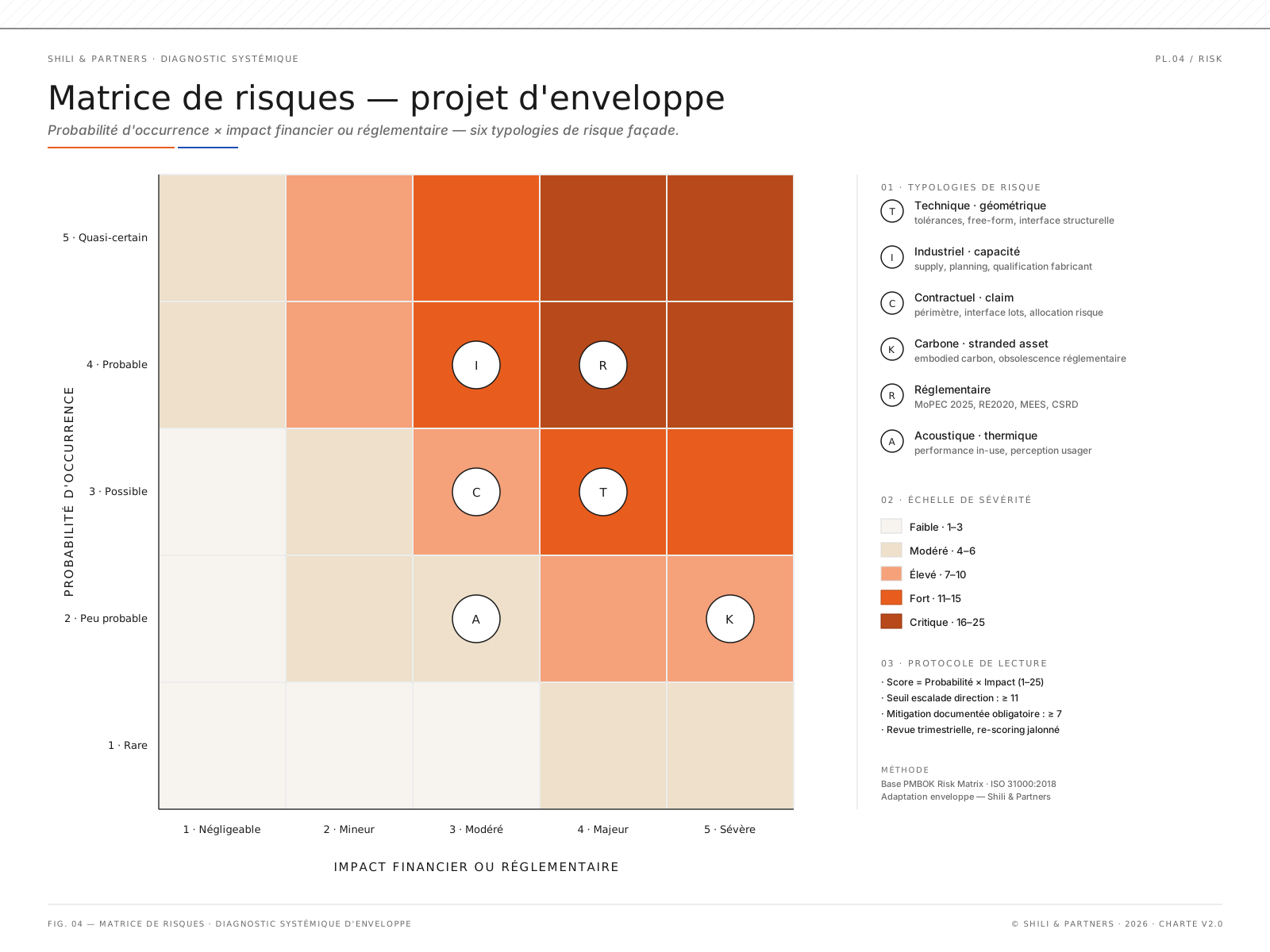
5×5 probability × impact risk matrix positioning six facade risk typologiesFIG. 04·c · Risk heatmap
03 / 03Risk heatmap 5×5, six facade typologies.
© S&P · base PMBOK + ISO 31000
04 / 04Analysis strand

Economic analysis.

Industrial shadow pricing, not per-m² ratios.

Industrial shadow pricing of the facade work package, built from actual fabrication, transport and installation costs as of the diagnostic date, not from per-square-metre averages. Comparison with the target budget: absolute gap, relative gap, analysis of critical line items. Costed reduction options, with documented impact on design and carbon. Budget risk assessment: probability of overrun, main variance drivers (aluminium market tension, fabricator capacity over the production window, maritime logistics). On complex projects, the gap between real industrial costing and a flat-rate estimate regularly reaches a factor of two, with a structurally unfavourable gap when costing relied on outdated per-m² averages.

Method
Refreshed costs
Risk
Documented variance
Shadow pricingVarianceFactor of 2
05 / 05Analysis strand

Risk analysis.

Heatmap of technical, industrial, contractual, carbon-regulatory risks + mitigation measures.

Technical risks (geometry, interfaces, materials, new technologies). Industrial risks (fabricator capacity over the production window, aluminium and glass supply lead times, logistics, single-source dependency). Contractual risks (critical clauses, potential claims per the chosen framework: SIA 118/329, CCAG Travaux, FIDIC Red/Yellow Book, VOB/B). Carbon and regulatory risks (future compliance, stranded-asset risk at 2035-2045 horizon). The output is a risk heatmap, prioritised along two axes: probability of occurrence and financial or regulatory impact, and paired with documented mitigation measures.

Output
Heatmap + mitigation
Horizon
2035-2045
Heatmap 5×5FIDICSIA 118/329
06 / 06Analysis strand

Recommendations.

Roadmap actionable by the project team, not to justify the diagnostic.

Technical, economic and carbon roadmap, with prioritisation of actions in the next phase, warning points to monitor, internal and external competencies to mobilise (blast specialists, BIPV, acoustics, in-situ instrumentation). Recommendations are written to be actionable by the project team, not to justify the diagnostic's own conclusion.

Target
Project team
Test
Actionable, not justificatory
RoadmapActionable
05Plate 05 / 10, Format

Format.

The diagnostic unfolds in four phases framed at kick-off. Pivot team: one senior in piloting, one senior engineer for technical analyses, ad hoc partners for SOTA specialties.

Four mission phases

Kick-off and immersion. Collection of project documents (architect dossier, existing studies, contract specifications if committed, site constraints). Perimeter framing with the client. Initial field analysis. Technical and economic analyses in parallel. Costing is built alongside engineering, carbon strategy alongside thermal sizing, risk analysis alongside industrial mapping. Synthesis and internal arbitration. Consolidation of strands, contradictory review by a second senior of the atelier, prioritisation of risks and recommendations. This step is the main quality lever of the diagnostic, it filters preliminary conclusions that do not hold against contradiction. Writing, review, debrief. Report delivered as an executable dossier (20-40 pages depending on complexity), presentation to the client's project team, handover of source technical files (parametric 3D model, costing spreadsheets, thermal and acoustic simulations).

Team & deliverable

Team: one senior in piloting and arbitration, one senior engineer for technical analyses, occasional technical partners when a SOTA specialty is mobilised (blast, wind CFD, BIPV, seismic resilience, complex acoustics). Deliverable: diagnostic report (20-40 pages depending on complexity, executive summary followed by detailed analyses by strand), on-site presentation to the project team, source technical files (parametric 3D model, costing spreadsheets, simulations), set of prioritised actionable recommendations. The exact mission duration is defined at kick-off according to the size and complexity of the project; a calendar with intermediate milestones is agreed at that point.

06Plate 06 / 10, Why effective

Why it is effective.

For the client, the diagnostic fulfils four functions that classic missions rarely combine: controlled cost, informed decision, unblocking, adapted cadence.

01 / 04Cost

Controlled cost

Fees fixed, framed at kick-off, without mid-mission inflation.

The budget for the facade audit is a contractual commitment, distinguishing it from time-and-materials missions where budget drift is structural.

Fixed-fee
02 / 04Decision

Informed decision

Not a judgment on the project, a factual base.

The client engages the next phase knowingly, with a reading grid shared by the stakeholders. The diagnostic becomes the arbitration reference for subsequent decisions.

Reference
03 / 04Unblocking

Unblocking tense situations

On schematic/detailed phase, independent arbitration legitimises.

The owner is not seen as cutting against the architect, the architect is not seen as forcing the owner. The diagnostic arbitrates on the basis of facts.

Arbitration
04 / 04Cadence

Adapted cadence

Duration defined at mission opening per complexity.

Not calibrated on a uniform commercial model. A competition diagnostic does not run at the same tempo as an investor's pre-acquisition audit.

Variable
07Plate 07 / 10, Pricing

Indicative pricing.

Three formats cover almost all missions. All diagnostics are fixed-fee and framed at kick-off, with no success fee.

Three canonical formats

Standard diagnostic: project with a dominant stake, framed perimeter, moderate technical complexity (standard curtain wall, SSG, or rainscreen on classic office project). In-depth diagnostic: complex project with multiple stakes, several technical strands mobilised in depth (complex geometry, ambitious carbon performance, regulatory exposure, multiple systems). Mega-project diagnostic: international project, multi-specialty, complex regulatory interfaces (foreign jurisdiction framework, multiple certifications, SOTA specialties mobilised). All diagnostics are fixed-fee and framed at kick-off. The amount is discussed mission by mission according to project size and complexity, with no success fee: this mission is not on conditional fees, and its factual value rests precisely on the absence of commercial bias on the conclusion.

08Plate 08 / 10, Distinction

What sets us apart.

Four elements distinguish our practice on systemic envelope diagnostics: deep industrial grounding, parallelised systemic vision, documented neutrality, confidentiality by default.

Industrial grounding, founder formula

Seventeen years in the envelope industry, including several years in pre-construction with a Tier-1 international contractor in glass envelope works.

This experience is the foundation of industrial shadow pricing: we know actual fabrication, transport and installation costs because we built them from the industrial side, not read them from a benchmark. On a diagnostic, this knowledge makes the difference between a defensible estimate within 20 % and an estimate grounded in market reality at mission date.

01 / 03Parallelisation

Parallelised vision

Few firms simultaneously carry engineering + economics + carbon + contractual + regulatory.

The majority outsources, creating silos that only meet at the final debrief. Our parallel handling lets constraints meet during the diagnostic.

6 dimensions
02 / 03Neutrality

Documented neutrality

No capital affiliation, no hidden commission.

No hidden partnership with an inspection body or certifier. The recommendations grid is guided by project fit, not by a referral circuit. This neutrality is contractual.

Contractual
En savoir plus
03 / 03Confidentiality

Confidentiality by default

NDA on request, restricted circuit pre-acquisition.

No public mention without explicit written agreement. On pre-acquisition missions for an investor, restricted circuit documented and secure destruction of documents at mission end.

NDADestruction
09Plate 09 / 10, Articulation

Articulation with other services.

The systemic diagnostic articulates with several of the atelier's services, as entry door, as contradictory review, or as prerequisite to a broader mission.

Five natural exit doors

Envelope Engineering: prerequisite to a full engineering mission. When the diagnostic confirms project buildability and identifies the priority technical work streams, the client naturally engages the follow-up with the team that has already assimilated the context. Owner's Engineer Envelope: preferred engagement mode for an owner that decides to accompany the project over its duration. Lead Envelope Consultant: design team mandate mode for projects where envelope technique conditions the overall schedule and budget. Owners & investors solutions: dedicated entry for institutional owners and investors mobilising the diagnostic as door to pre-acquisition due diligence. Business Engineering: when the diagnostic reveals that beyond the project, it is the client company itself that carries a transformation stake, the conversation can open to a Business Engineering mission, with explicit declaration of perimeter and editorial shift.

10Plate 10 / 10, Confidentiality

Confidentiality.

All documents received in the context of a diagnostic are treated in absolute confidence. A NDA is systematically signed on client request, or proposed by default when the mission context warrants.

Confidentiality discipline

No public mention of the diagnostic, its perimeter or its conclusions is made without explicit written agreement from the client. Dossiers are isolated in restricted-access environments, traceable, with an authorised consultants list kept up to date. For missions delivered to an investor in an acquisition phase, a restricted circuit can be activated: access limited to two people on our side, dedicated documentation, secure destruction of documents at mission end under contractually agreed terms.

11Plate 11 / 11, Articulation

Continue reading.

The systemic diagnostic opens a sequence of missions according to the decisions it informs. Six canonical entries.

01 / 06Hub

SOTA expertises

Vertical specialties mobilised after diagnostic.

Hub8 specialties
En savoir plus
02 / 06EE pillar

Envelope Engineering

Full engineering mission that naturally extends a validated diagnostic.

BET
En savoir plus
03 / 06Forensic

Facade forensic

Forensic when the diagnostic reveals a litigation context.

Forensic
En savoir plus
04 / 06D&B

Design-Build Lead

Consortium lead posture when the diagnostic confirms a D&B trajectory.

D&B
En savoir plus
05 / 06OE

Owner's Engineer

Downstream engagement mode for continuous owner representation.

OE
En savoir plus
06 / 06Claim

Claim Management & Arbitration

When the diagnostic reveals a dispute context.

Claim
En savoir plus

A diagnostic mission to frame?

Every systemic diagnostic hinges on the precision of the perimeter defined at kick-off. Describe the project context in a few lines, we revert to frame the mission. NDA on request.

Diagnostic brief
Shili & PartnersA Shili Build Ventures company